

Brewing a Brand New Coffee: What’s Your Go-To Filter Coffee Recipe?
Brewing a Brand New Coffee: What’s Your Go-To Filter Coffee Recipe?
All coffees are different, and so it stands to reason that over time, you might modify your recipe to better accentuate certain characteristics of that unique coffee. But let's say that you're brewing up a brand new coffee for the first time, and you only get one attempt to make it taste as good as you can.
This guide showcases some of the most trusted filter coffee recipes used by world-class coffee professionals in 2026. To collate this guide, we asked some of the world's most renowned coffee professionals to give us their go-to recipes.
What’s your go-to filter coffee recipe when brewing a new coffee for the first time?
- What brewing device should you use?
- What temperature should you set your kettle to?
- What grind size are you using?
- How long should you bloom for?
- What pour stages should you try?
- And are your results usually good?
These are questions that we asked to some of the most renowned coffee professionals (in addition to supplying our own answers to this question as well) so that we could compile a set of brewing blueprints for you to try out at home, in the event that you find yourself in this situation.
One thing of quick note: many of the recipes suggested here go against conventional wisdom, but take assurance that everyone selected for this conversation piece very much knows what they are talking about. Whenever I spot something interesting, I ask the interviewee to expand a little on their thought process.
Quick Summary
If you're brewing a brand new coffee for the first time, most professionals in this guide recommend:
- Brewer: V60, Orea, Kalita or another percolation brewer
- Ratio: Around 1:15 to 1:17
- Water Temperature: 91–94°C
- Bloom: 2x–3x coffee weight for 30–45 seconds
- Target Brew Time: Roughly 2:00–3:00
The biggest variables professionals adjusted were grind size, water composition and brewer geometry — not just temperature.
If You're New to Filter Coffee, Start Here
If all these recipes feel overwhelming, don’t worry. The biggest takeaway from this guide is that there is no single “correct” recipe.
If you’re just getting started, use:
- 15g coffee
- 250g water
- 93°C water
- Medium grind size
- 30–45 second bloom
- 2:30–3:00 total brew time
From there, adjust grind size first before changing anything else. If you want to understand a coffee before brewing it properly, cupping is still one of the best ways to evaluate flavour clearly.
World-Class Baristas Share Their Go-To Filter Coffee Recipes
| Professional | Chosen Brewer | Temperature | Coffee Dose & Target Water |
|---|---|---|---|
| Carly Green | Kalita Wave or Ceramic | 93–96°C | 15g → 250g water |
| Junchao Huang | Origami (Conical Dripper) | 92°C | 15g → 230g water |
| Alexa Elizabeth Lee | Orea (Flat-bottom) | 94°C | 13g → 215g water |
| Natdanai Denham | Conical | 94°C | 15g → 225g water |
| Ted Longden | Clever Dripper | 94°C | 15g → 250g water |
| Alan Jarrar | Kalita 185 | — | 30g → 500g water |
| Sharon Ip | FLO fast base / OREA V4 fast base | 91°C | 18.5g → 250ml water |
| Cleo Tsai | Hario V60 | 93°C | 15g → 250g water |
| Gage Quinn | Orea V3 | 94°C | 12g → 200g water |
| Kish (Team Harmony) | V60 (Conical) | 93°C | 16g → 250g water |
| Ben (Team Harmony) | Orea V4 + Sibarist Fast Flow | 94°C | 16g → 250g water |
Carly Green
Renowned Q-Grader, Coffee Content Creator & Founder of Cherry Love
"Imagine you're brewing a brand new coffee for the first time... What's your go-to brewing recipe + brewer of choice, and why?"
Can I say Cupping?! Whenever I’d like to get to know a new coffee, it’s always best to taste it in a cupping setting for a bit of comparison. That’s why my business Cherry Love is all about making cupping more fun and approachable with our themed mystery boxes!
When I’m not cupping coffees, I like my pour-over style to mimic the strength of a cupping. I keep my pour-over recipe incredibly simple with my Kalita Wave in the morning, and lately, I’ve been loving my handmade ceramic version of this brewing style with my dripper from Mindful Design and Craft from Austria. It’s a gorgeous dripper, and I’ve loved every cup I’ve brewed from it!
Brewer: Kalita Wave or Ceramic
Coffee: 15g
Water: 250g total
Temperature: 93–96°C (adjust depending on roast level)
Bloom: Pour 30g of water, let it sit for 30 seconds.
Pour: Three Steady pours of equal, to reach 250g
2:00–2:30 total brew time.
"Is there anything about this recipe in particular that you find preferable to others that you have tried? Or would you say that it has been something ritualistic that you've settled on over time, which is always trusty and reliable? Or something else maybe?"
I’d say it’s my tried and true and pretty malleable to most coffees! Though I do change the dose by a gram or two sometimes depending on if I want to highlight body or acidity.
Junchao Huang
UK Brewers Cup 3rd Place (2023), Director and Head of Coffee for Calico Coffee
"Imagine you’re brewing a brand new coffee for the first time.. what’s your go-to coffee brewing recipe + brewer of choice, and why?"
Generally, when I work with a new coffee bean, I use a standard recipe:
Brewer: Conical dripper, usually an Origami,
Dose: 15g of coffee
Water: 230g of total water
Water Temperature: 92°C
Brewing process:
- Bloom: Pour 30g of water and let it bloom for 30 seconds.
- First pour: Use a medium flow rate (~8g per second) to pour until the total reaches 120g.
- Final pour: At 1:15, use a fast center pour to bring the total up to 230g. Allow to drain.
This is my general approach when brewing a new coffee bean.
Is there anything about this recipe that makes you prefer it over other recipes?
Do you find it more consistent in the results it gives? or something else maybe?
Also, of everybody that has responded so far, your temperature is 2-3c lower than others. What made you choose this temperature?
First of all, I personally believe that water temperature is not the key factor influencing coffee extraction. For me, the particle size distribution of the grind is more important. For example, in this recipe, I prefer using a grind size between 600–800 microns.
Within this range of particle size distribution, a moderate water flow with controlled agitation during pouring can yield relatively even and stable extraction results. For a coffee bean being brewed for the first time, these parameters provide a relatively stable and consistent extraction outcome.
Of course, using a flat-bottom dripper would achieve even more uniform extraction parameters. However, personally, I have become accustomed to the style of the Origami dripper, which helps me better understand the primary flavor profile of this particular coffee.
The main reason for choosing this recipe is my familiarity with the Origami dripper compared to other brewers. Temperature is not a priority in my considerations.
Alexa Elizabeth Lee
UK Cup Tasters Champion 2024, SCA Judge, Saint Espresso
I like using a flat bottom brewer like Orea. It's one of my favourite brewers, and has never failed me. Even when brewing brand new coffees for the first time.
I'll go for a smaller dose at first, like 13g. So that if it mess it up the first time, it's not too much of a waste. I like to bloom it for at least 3 times the dose weight, so 40g in this case, and for a duration between 45s - 1 minute, depending on when it was roasted.
I'll go for a 1:16.6 ratio as I found this worked best across a lot of different coffees, and I like to use a grind size roughly equivalent to 22-23 clicks on the Comandante grinder.
Dose: 13g
Water: 215g
Grind Size: 22-23x Comandante
Natdanai Denham
3rd English Aeropress Championship 2023, UK Cup Tasters Finalist, Director of Jan Lek
"Imagine you're brewing a brand new coffee for the first time... What's your go-to brewing recipe + brewer of choice, and why?"
My adjustment is only based off of grind size, looking for a light-medium body, well extracted, juicy and with a pleasant finish
Brewer: Conical,
Dose: 15g of coffee
Water: 225g of total water
Water Temperature: 94°C
Grind Size: 27x Comandante
Pour 1: 0:00 - pour 30g for bloom
Pour 2: 0:30 - pour 65g
Pour 3: 1:10 - pour 65g
Pour 4: 1:50 - pour 65g
Target Brew Time - 2:45 - 2:50
In terms of water, I am looking for 100 - 120ppm. This recipe demonstrates a balanced approach to brewing coffee, particularly for those who may not have a specific flavour profile in mind when picking up a random bag of beans.
What made you choose this recipe over others?
Consistency Across Varieties: This recipe is tailored to provide a balanced, well-extracted cup regardless of the coffee’s origin or roast level, making it ideal for “exploration brews.” It offers flexibility and allows you to adapt based on grind size while maintaining an efficient workflow.
Balance of Extraction & Body: The 1:15 ratio, with medium-coarse grind and controlled pours, balances clarity and sweetness while avoiding over-extraction. This creates a versatile foundation for a light-medium body and juicy finish.
Accessibility: Using tap-filtered water at 100–120 ppm ensures a reproducible brew for most users without the need for high-end water solutions. This makes it more approachable.
Is this something that you settled on over time through trial and error?
Yes, it a reflects an evolution based on personal experience and numerous trial brews. The progression of smaller pour sizes (after bloom) shows deliberate experimentation to enhance control over extraction and avoid channeling. This recipe probably represents your “sweet spot” for extraction efficiency and flavour balance after trying different variables
Also, many others have been doing long bloom ratios (3x dry weight), did you experiment much with longer blooms, or was this something that you tried and decided was less optimum for your preferences?
Longer bloom ratios (e.g., 3x dry weight) are excellent for coffees with very dense beans (like from Ethiopia, Peru, etc.) or a high amount of CO2, such as fresh, lightly roasted coffees. However, they can sometimes: for me can extend brew times too much, reduce control over extraction balance if not adjusted carefully, & can compromise sweetness for clarity in some cases.
By sticking to a 2x bloom ratio (30g for 15g), keep the brew approachable while ensuring the blooming phase is efficient enough to release excess gas without stalling the brew.
More on my experience behind shorter bloom: prioritise balance over chasing extreme clarity or body, quicker bloom works well with most coffees, avoiding uneven extraction due to extended pre-wetting, & By keeping the bloom shorter, you ensure subsequent pours fully saturate the bed without over-compensating.
I’ve tried longer blooms (e.g., 45–50g for 15g), I have found: It works well with some coffees but doesn’t universally yield great results. The extended bloom introduces variables like heat loss and inconsistency, especially with tap-filtered water. It shifts the focus toward clarity at the expense of sweetness and body, which may not align with my goal of a juicy, well-rounded brew.
If you prioritise peak flavour balance, shorter blooms often reduce complexity while still allowing for easy adjustments. You can fix your bloom in the result for coffee that have amazing floral notes.
Ted Longden
3rd UK Barista Championships 2023, Head Barista at WatchHouse
"Imagine you're brewing a brand new coffee for the first time... What's your go-to brewing recipe + brewer of choice, and why?"
Brewer: Clever Dripper
Dose: 15g of coffee
Water: 250g of total water
Water Temperature: 94°C
Water Composition 40ppmKH, 80ppm GH
Once coffee has been dosed into the brewer
0:00 Add all water at once, Stir
2:30 Drain
I find this is very forgiving and gets me an 8/10 brew 100% of the time.
In a number of the other responses, I've seen a big variation in the water temperature, some saying that they don't see water temperature as a key factor in extraction influence, seeing other factors as more paramount. Is temperature something that you have played around with in this recipe? Given the forgiving nature of the Clever dripper, what made you prefer brews at 94c over hotter/cooler?
I believe that in coffee, the flavour potential is set by the producer, and to an extent, the roaster. I don’t think, as someone who makes coffee, I can change what is there. I believe that it is most important for baristas to control the controllable, and make sensible choices about recipe and water; the end goal highlights all the positive flavours in the coffee, whilst minimising the negative flavours. 94° generally is never WAY too hot, or WAY too cool for the style of coffees I drink and work with - hence why it is a sensible starting point. If I were working somewhere else, maybe this would not be the case.
And more specifically about the clever dripper - as my method is all the water in at once, the slurry has quite a high thermal mass (compared to doing 50g pulses, for example).
Again, it's great to see the diversity of responses here. Your recipe is fairly unique to the degree that you've opted to pour all of the water in at once, thus no initial bloom stage, where others have. What is it about clever drippers and other immersion/semi immersion methods that make this mechanically viable/advisable in your opinion?
The majority of extraction is done as immersion By the time there is percolation through a coffee bed, all of the carbon dioxide has been off gassed.
Alan Jarrar
CEO of Jokes Aside Coffee, Stav Se Espresso Bar and 50 Percent Arabica
"Imagine you're brewing a brand new coffee for the first time... What's your go-to brewing recipe + brewer of choice, and why?"
Whether we're going through samples/selecting coffees for our portfolio or we're brewing something tasty from our shelf (we have 25 coffees there atm which is super generous), my brewing approach at home stays the same.
I pour off the boil Brita filtered water poured into a gooseneck kettle and let it sit for a minute until I grind the coffee on the Comandante (it's been 18 clicks for the past two years or so). 30 grams of coffee is ideal for me and Kalli.
Recently I started brewing a lot on a 185 Kalita after a long time. I find the profile of the flat bottom brewers a little more balanced and I fancy that lately.
Brewer: Kalita (185)
Grind Size: 18x Comandante
Dose: 30g of coffee
Water: 500g of total water
0:00 Pour 60g bloom (at around 8g/s flow rate)
0:30 Pour 270g (330g total)
Wait 20s, then Pour 170g more
Swirl after the last pour
Target Brew Time: 2:05 - 2:35
As long as it's delicious, I have no desire to change the recipe (it is most of the time). Kalli brews differently though. Same water, same grind size, usually a copper V60 or Kalita but a different approach. 25g of coffee to 250-300g of water (1:10-1:12) and I like her brews a lot as they reveal a lot of acidity but they're still balanced in the finish.
Sharon Ip
2nd English Aeropress Championship 2024, Head Barista at TABxTAB
To brew a brand new coffee, i will first have a good look at it and cup it to see what is it all about, what i really like, what i’d try to avoid. A basic to-go recipe for me is easily accessible:
Brewer: Flo (fast base)(similar to OREA V4 fast base)
Paper: Kalita Wave 185
Grind: 20 clicks Comandante C40 (depends on coffee, 19-25 clicks)
Alternative Grinder: 6” on Fellow Ode 2
Water: 50-80ppm
Water temperature: 91C
Coffee Dose: 18.5g
Total Water: 250ml
0:00 60ml blooming
0:40 circular pour to 130ml
circular pour to 195ml
Centre pour to 250ml
Result should be full of character, might not be the cleanest but will not disappoint as the very first pour!
This to-go recipe focuses mainly on the front and sweetness, reducing the chance of over-extracting your newly acquired coffee. I actually use the same recipe(pours) for any other dripper by playing around only grind size/water temp/ratio.
Can you tell us a little more about your choice for water composition. Generally of the contributors of this blog, the general composition range has been between 80-150ppm. Your recipe is a little lower comparatively - was this something that you settled on via trial and error?
Choice of water composition goes hand in hand with other choice in my recipe.
I found this gives me the result I prefer; complex, flavourful, lighter body, easier drinking. it’s also a base to refine everything. Now with APAX i can always up dose my water ppm according to initial results.
I'm also used to this range of ppm because TABXTAB has an RO and 50-80ppm kinda work with all of our coffees (both Brazilian house and other guest filters). We have had 120-150ppm before but with slow transition and experimenting, we love to go low!
Water temperature is also something that has featured quite heavily on this blog - same question about your water temperature choice, did you settle on this over time? Have you experimented much with hotter and cooler waters?
In day to day life, I have used up to 98C to 83C depending on brewer and coffee to bring out it’s best character and experiences. but for a to-go recipe, a 91C is the safest option to start, most of the time is nailed good result! This water composition as well works just fine together with other parameters! If customers ask, i usually tell them this same recipe, and they come back to me and say they are happy!
Your ratio is roughly 1:13.5, which is quite up-dosed comparatively compared to the generally accepted crowd wisdom of 1:15 - 1:17. How did you settle on this as a start point?
Totally personal preference. I like brews with shorter ratio to get a punchiness and stronger character, also to avoid a negative aftertaste. 1:13.5 is somewhere I found satisfaction with a lot of coffees (especially as a natural coffee lover, that matches well)
I do bypass with water post-brew sometimes if it tastes “too cramped” and messy.
Cleo Tsai
Canadian Brewers Cup Finalist ‘24
Hello 👋 I am Cleo and I like brewing coffee!
Every time when I receive a bag of coffee, I always like to check the beans first and see the roast level, the sizes of each of the beans and even check if the variety is consistent with the bean sizes - we all learn something everyday and I love it.
Then there is a recipe in my mind. Normally I like to do 1:16.67 ratio, trying few things and this 15g ground coffee dose in, 250g water - This is my daily take, something I’m comfortable with.
Grind size, I like to do medium course, then water temperature will be 93 Celsius for the start. Of course later on, I might decide to adjust one or both of these, depends what results are we going to expect.
I do like Hario V60 brewing dripper and believe that’s the most affordable and common one to see in the market. Some of the coffees on instinct I know are going to be a bit tricky, for those coffees I will probably go for OREA v2 flat bottom dripper and using type-G filter paper, this is the one I te to use for anaerobic fermentation or other crazily processed stuff.
The reasons are, first, water floating in flat bottom in some case would be extracting fast and not cloaking during extraction. Second, I have more control in brewing aka comfortable and confident.
Brewer: Hario V60
Dose: 15g
Water: 250g
Water Temp: 93c
Grind Size: Medium Coarseness
Water composition: Brita Filtration
Pour 1: 0:00 - 60g circle pour in 6 seconds
Pour 2: 0:30 - 60g circle pour in 6 seconds (120g total)
Pour 3: 1:00 - 60g circle pour in 6 seconds (180g total)
Pour 4: 1:30 - 70g centre pour (250g total)
Target Brew time: 2:40
It brings out lots of sweetness and acidity which I like in my coffee!
When it’s at home, I like to use brita water, and it’s easier! When it’s at the cafe, cuz I know I have too much stuff I can play with, recently I got Apax water component and love it!
I hope you enjoy this recipe and let me know how it works! Cheers!
You mentioned that you enjoy using the Apax drops. Is there a method to your madness here?
Under what circumstances would you experiment with each of the drops, what are you looking for from each?
As home brewers who are willing to explore more for water chemistry and science behind, I’d like to suggest to read articles or even dig into some chemistry subjects. Here is good resource for that.
https://apaxlab.com/pages/faq
Your recipe is really simple and easy to replicate. The numbers are all very easy to follow.
Is this something that you settled on over time? Do you like it this way because it’s simple and ritualistic? Or are there other reasons that helped you come to this recipe?
This is the recipe I tried over the years and suits for almost every coffee! It’s simple and it’s easy to replicate, not only for coffee professionals serving coffee at the cafes but also for home brewers too!
Gage Quinn
Northern Filter Champion ‘23
How we brew a coffee is largely decided by how it's roasted. Different levels of bean solubility and density require different brew parameters. For best results, we focus on 3 main ones: device, water, ratio. Lighter roasted coffee prefers percolation brew methods, hotter water, and wider ratios. This is because lighter roasted coffee is typically less soluble, so favours more energy in the brew, more water, and more agitation which is all achieved by simply using a percolation brew method such as Orea, V60, and Kalita.
As that's what we tend to brew most, I'll give a typical recipe for lighter roasted coffee
Brewer: Orea V3
Dose: 12g @ 25 Comandante clix
Water: 200g @ 94°c (80-100ppm using APAX Lab)
00:00 Pour 30g at a slow rate (3g/s)
00:35 Pour to 105g (4g/s)
01:15 Pour to 200g (5-6g/s)
The first two pours can be spiral patterns, or I move the kettle stream to push down any floating bits of coffee and orange foam. Once the surface of the slurry is pale, you can pour faster and in the center
This would be a typical recipe for maybe something like Harmony's Basha Bekele. It'll yield a super sweet cup with a strength of around 1.30% for optimal balance between intensity and flavour clarity. If I want to change anything about the brew, I'd look to change the three aforementioned parameters before changing anything else. Grind size remains a constant (yes even if I change coffees generally).
Team Harmony
Kish
Wholesale Manager
Brewer: Conical dripper, V60 (blue plastic if you must know!)
Dose: 16g of coffee
Water: 250g of total water
Water Temperature: 93°C
Pour 1: 0:00 - pour 50g for bloom
Pour 2: 0:30 - pour 50g
Pour 3: 1:00 - pour 50g
Pour 4: 1:30 - pour 50g
Pour 5: 2:00 - pour 50g
This is a rough guide, but depending on how fast each pour runs through I sometimes group some pours together, if it’s slower than expected.
Grind size: Coarse- very coarse grind as I’m on a wilfa svart so there’s enough fines that you can slow down the brew with a swirl, but not enough to stop a good gentle pour from draining through nicely.
Target Brew time: 2:40 ish. I adjust the grind to make the pours behave the way I like and based on taste.
Usually only want to stick to 93 or go to 96 degrees for an extra special coffee depending on taste Seems whacky but works surprisingly well and will take 2/3 brews max for most* coffees that I bring home. Some just have a much smaller sweet spot than I’m expecting, so take an extra couple brews.
Ben
Head of Coffee & Director
Brewer: Orea v4
Filter papers: Sibarist (Fast Flow) Martin Wölfl
Dose: 16g
Water: 250g
Grind Size: Comandante 26 clicks (or 7.0 on Lagom 01)
Water Temperature: 94c
Water Composition: 88ppm (30ppm KH, 48ppm GH)
Pour 1: 0:00 - 50g in 6 seconds, concentric circle pour
Pour 2: 0:35 - 75g in 10 seconds, concentric circle pour (125g total)
Pour 3: 1:05 - 60g in 10 seconds, concentric circle pour (185g total)
Pour 4: 1:35 - 65g in 8 seconds, concentric circle pour (250g total)
TBT: 1:50 - 2:00
It can be quite difficult to convey flow rate through a text based medium, but this is the recipe that I have gravitated to recently as a starting point - mostly because it's just easy for me to remember, but also because the results have been pretty decent and repeatable.
I tried a number of times to work with smaller doses - 12g, 13g, etc. but it never works very well for me and the brews always have a way of tasting like everything has been dialled down to 7/10 in intensity - my friend Lewis from Functional accessories always seems to find a way of making his brews taste much better at those low doses. So alas, I have to brew at higher doses to get any kind of flavour out of my coffees - but that's probably technique related.
Every few months I tend to try something new when brewing, and right now, that obsession tends to be around modifying dosage, and experimenting a lot more with lower brew temps, as it seems to have become fashionable again to muck around with 92, 93, 94, etc - rather than brew at boiling.
I find that with these new recipes, I'm trading aromatic intensity for cup flavour clarity, which is a trade I'm happy enough with. I've gone from aiming for a 2:45 brew time in 2016, to a 4:30 brew time in 2020 on a Fellow Stagg X, to now trying to keep my brews around the 2 minute mark, as I've gradually graduated towards faster, clarity based brewing.
I wouldn't try this recipe unless your brewer and papers match, as the Orea brewer is pretty much designed for fast exit flow and the Sibarist papers are designed especially not to clog, so if you're using a Hario V60 with normal Hario papers, trying to match a 1:50 percolation time, the brews will taste bad and you'll need to grind on like... grind size 40.
If you do decide that you want to try this particular recipe out, and you have all the equipment, I would definitely suggest waiting until your coffee is at least 21 days off roast and thoroughly rinsing your paper filter, as if your coffee has a lot of trapped gasses, you might find that it just tastes and smells a bit like hot wood. If you're working with a washed coffee, or a coffee that produces a lot of chaff - blow the chaff away as much as you can.
While I experiment with quite a lot of things, I've never really been personally very happy with brewing at a 1:15 ratio or below - I know it's fine and I have had some very nice brews at 1:15, but out of personal preference, I prefer to just give myself a little bit of an extraction buffer with a slightly longer ratio than 1:15 - as that ratio (when I'm brewing) can sometimes walk the line between being well extracted, and leaving flavour behind in the brewer.
Common Patterns Across Professional Brewing Recipes
One of the most interesting things about collecting these recipes was discovering how wildly different they are, despite all of the contributors producing exceptionally high quality coffee.
Some professionals preferred extremely simple immersion brewing with almost no agitation, while others leaned heavily into fast-flow percolation brewing with highly engineered brewers and paper combinations.
That said, a few common trends appeared repeatedly throughout the interviews.
1. Most Professionals Prioritise Grind Size Over Temperature
A recurring theme throughout this article was that grind size and particle distribution mattered more than temperature alone.
Multiple contributors — especially Junchao Huang and Gage Quinn — emphasised that extraction consistency comes primarily from controlling grind distribution, agitation and flow rate rather than endlessly tweaking kettle temperatures.
This was particularly interesting because online coffee discussions often obsess over water temperature as the primary extraction variable.
In practice, most contributors simply selected a sensible temperature range (usually 91–96°C) and adjusted grind size around that foundation.
2. Most Recipes Aim For Repeatability Rather Than Perfection
Very few contributors claimed their recipe was “perfect”.
Instead, most recipes were designed to create consistently good brews across many different coffees without requiring excessive dialling in.
Ted Longden described his Clever Dripper recipe as an “8/10 brew 100% of the time”, which is probably one of the most realistic and useful philosophies in this entire article.
Rather than chasing perfection through endless tweaking, many professionals appear to prioritise recipes that are forgiving, repeatable and easy to adjust.
3. Flat Bottom Brewers Continue To Gain Popularity
Another clear trend was the popularity of flat-bottom brewers.
Kalita, Orea and FLO brewers appeared repeatedly throughout the interviews, with many contributors suggesting they provide more balanced and forgiving extractions compared to conical brewers.
This doesn’t mean V60-style brewers are “worse” — several contributors still preferred them — but it does suggest that many professionals currently favour flatter extraction profiles with lower risk of channeling and clogging.
4. Lower Brew Temperatures Are Becoming More Common Again
Back in the late 2010s, brewing “straight off boil” became increasingly fashionable, especially for very light roast coffees.
What was interesting here is that many contributors have gradually moved back downward again into the 91–94°C range.
Several people noted that slightly lower temperatures can trade some aromatic intensity for improved flavour clarity and balance.
This doesn’t necessarily mean lower temperatures are universally better — only that preferences appear to be shifting again.
5. Simplicity Often Wins
Perhaps the biggest surprise was how simple many recipes actually were.
Cleo Tsai’s recipe is essentially just four evenly spaced pours.
Carly Green’s approach is intentionally minimal and designed to mimic the intensity of coffee cupping.
Ted Longden literally pours all of the water in at once.
Even among world-class competitors and judges, there was surprisingly little obsession with hyper-complex brewing structures.
Most contributors simply wanted recipes that tasted good, were easy to repeat, and allowed them to understand the coffee quickly.
What This Means For Home Brewers
If there’s one thing worth taking away from all of these recipes, it’s probably this:
There is no single “correct” way to brew coffee.
Different professionals value different things:
- Some prioritise sweetness
- Some prioritise clarity
- Some chase body and texture
- Some want maximum flavour separation
- Some simply want consistency and ease of use
And all of those approaches are valid.
If you’re relatively new to filter coffee, the most useful thing you can do is choose one simple recipe and become extremely familiar with it before changing variables constantly.
Once you understand how your brewer behaves, how your grinder behaves, and how different coffees respond to extraction, it becomes dramatically easier to adjust recipes intentionally rather than randomly.
This is also why many professionals in this article settled into “default” recipes over time — not because they are objectively perfect, but because familiarity helps them understand new coffees more quickly.
Personally, I think this is one of the most underrated aspects of brewing coffee.
Frequently Asked Questions
1. Do water temperatures really matter that much when brewing filter coffee?
According to Junchao Huang (Calico Coffee), water temperature is not the main factor influencing extraction. He believes that grind particle size distribution is more important, and that controlled agitation and flow rate create more consistent extractions.
2. Why do some professionals prefer flat-bottom brewers over conical drippers?
Carly Green prefers flat-bottom style brewers like the Kalita Wave because they produce a profile closer to cupping, helping her understand a new coffee’s flavour quickly. Sharon Ip also notes flat-bottom brewers like the FLO or Orea produce cups that are full of character, easy-drinking, and reduce the risk of over-extraction.
3. Is blooming always necessary in pour-over brewing?
Most contributors bloom their coffee — but Ted Longden (WatchHouse) showed that you don’t always need to. Using the Clever Dripper, he pours all water in at once, stirs, and drains at 2:30. Because extraction happens via immersion first, the coffee degasses without a traditional bloom stage.
4. Why do so many recipes start with 15g doses?
Several competitors (including Carly, Junchao, Natdanai, and Ted) start at 15g because it’s a balanced dose that works across origins and roast levels, giving enough strength without wasting coffee when adjusting recipes.
5. Why would someone choose a smaller dose like 12–13g?
Alexa Elizabeth Lee starts at 13g so that if she gets the brew wrong, she isn’t wasting coffee. Gage Quinn also brews with 12g to focus on clarity and sweetness at a strength around 1.30%.
6. Does water composition change the flavour?
Sharon Ip brews with 50–80ppm water for lighter body, complexity, and easy drinking. Natdanai Denham prefers 100–120ppm because it produces balanced, accessible brews that most people can reproduce without special water.
7. How does coffee processing affect brewing recipes?
Coffees processed using different methods can behave very differently during brewing. For example, heavily fermented naturals often produce more fines and can clog brewers more easily, while washed coffees are often cleaner and easier to extract. You can learn more in our complete guide to coffee processing.
8. What’s a safe, universal starting recipe for a brand new coffee?
Cleo Tsai uses a simple recipe that works for nearly anything: 15g coffee, 250g water, 93°C, and 4 steady pours — because it brings out sweetness and acidity without much dialing in.
9. Why do some baristas use RDT before grinding coffee?
Some brewers lightly mist coffee beans before grinding to reduce static and improve grind consistency. This technique is called RDT (Ross Droplet Technique). You can learn more about why RDT reduces static here.
10. How does coffee origin/variety affect brewing recipes?
This is an excellent question. More broadly here, I'm going to give a quick insight into something we talk a lot about in coffee called 'terroir characteristics', which is a posh way of saying 'stereotypes'. When you taste a large sample size of coffees from particular places, you can draw out commonalities shared across many of those coffees. Some countries, because of the climate conditions, typical varieties planted, soil type and altitude produce higher density coffees - like Colombia, Peru, Ethiopia and Kenya. For coffees from these locations, it's a safe approach to take your grind setting one or two settings coarser.
More Guides You Might Like
• The Best Coffee Scales 2025 — our breakdown of the most accurate and reliable scales for home and café brewing.
• How Coffee Pairs with Music — exploring how sound affects flavour perception.
• Learn more about Junchao’s methodology during our bar takeover with Calico Coffee in London: Read here.
• Espresso lover? Check out our guide to the Best Coffee Tampers.
• Curious about different flavour profiles? Read our complete beginner’s guide to coffee processing.
• Want to improve your summer brews? Learn how to make incredible iced pourover coffee.
Does grinding coffee fresh really matter?
Check out our complete beginner’s guide to coffee processing.
Learn how to make the world's most incredible iced pourover.
Learn how to cup coffee like a professional.
The importance of using a good coffee scale
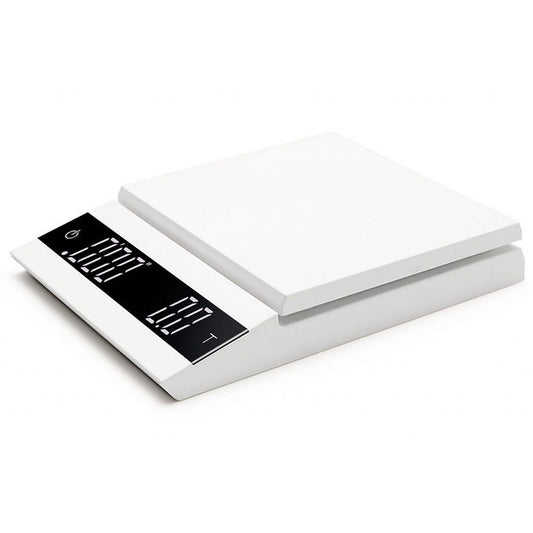
Most recipes in this article rely on precise ratios, controlled pours, and consistent flow rates. If you don’t have time to read the full buyers guide, we recommend the Felicita Parallel — a café-grade waterproof scale with fast response time and high accuracy.
Try These Recipes Yourself
For a great example of a highly expressive coffee that responds dramatically to brewing variables, check out our guide to Pink Bourbon coffee.
If you'd like to experiment with the brews shared by the baristas in this article, you can grab some freshly roasted beans here:
https://www.harmonycoffee.co.uk/collections/our-coffee

About the Author
Ben is the Head of Coffee at Harmony Coffee, a competition barista and trainer with over a decade in specialty coffee. He’s trained hundreds of baristas, competed in UK coffee championships, and spends an unreasonable amount of time making pourover recipes.









1 comment
Brilliant blog entry, appreciate the time and effort to produce this and thanks to the contributors for sharing.