Last updated:
Estimated reading time: 12-15 minutes
Quick Answer - Can You Freeze Coffee Beans?
Yes - Freezing coffee is one of the best ways to preserve freshness and extend a coffee's peak flavour window. Once coffee has sufficiently degassed, freezing dramatically slows oxidation and flavour loss. Vacuum sealing is best for long-term storage, while reusable containers are a convenient way to pre-dose and store coffee for everyday use.
Done correctly, freezing coffee beans can preserve freshness, slow oxidation and keep coffee closer to its peak flavour for months or even years.
Here's what I've learned over the course of five years of freezing exceptional coffee in both coffee shop and home settings.

Why Does Freezing Coffee Work?
The Peak Flavour Window
During coffee roasting, carbon dioxide (CO2) builds up inside the bean which will start to escape for a duration afterwards. It is important to rest coffee for a few weeks before brewing it, as the CO2 will hinder the brew by preventing water from sufficiently saturating the grounds, as well as create carbonic acid (H2CO3) which we taste as a bitter compound.
The amount of CO2 and the speed at which it degasses is largely dictated by how the coffee was roasted. If you'd like to learn more about the importance of resting coffee, we have already published a detailed guide on resting coffee.
Once most of the CO2 has been degassed from the coffee, it will begin staling through oxidation. At this point, the coffee will begin to lose its aromatics, starting with the most delicate and volatile aromatic compounds like the acidity and florals. After most of the CO2 has degassed but before oxidation has taken effect there is a window of peak flavour where you will get the best out of your coffee.
Freezing coffee dramatically slows down the rate at which degassing and oxidation occur–pretty much to a standstill (but not completely) which widens this ‘peak flavour window’ dramatically.

A perhaps overly-simplified visual representation of how coffee reaches and exits the ‘peak flavour window’. The width of the window and the speed at which it is reached is decided by roast level, density, and porousness of the bean (lightly roasted coffee will have a wider window, but will take longer to get there)
How Long Does Frozen Coffee Last?
In our experience, coffee stored correctly in a freezer can maintain excellent flavour for years. While coffee never completely stops ageing, freezing dramatically slows oxidation and flavour loss. I've personally enjoyed coffees that have been frozen for several months, and people I trust immensely, including 2025 UK Barista Champion Will Woodhouse-Banks, have shared excellent experiences of drinking coffees that had been frozen for several years.
The exact lifespan depends on how the coffee is stored. Vacuum-sealed coffee tends to preserve flavour better than coffee stored with excess air in the container, which is one reason why we reserve vacuum sealing for long-term archival storage, and for exceptionally high quality, and rare lots.
What Are The Benefits Of Freezing Coffee?
Simply put, freezing coffee allows you to hold the coffee at its optimum flavour.
While it is definitely possible to drink a bag of coffee within the peak flavour window (especially with lighter roasts), by freezing the coffee as it hits this optimal window, you can extend this peak potentially by a matter of years.
Stock Up On Your Favourite Coffee
Each lot of coffee is unique, it varies season to season. Once you’ve finished a bag of coffee, you may never have that exact experience again. That is unless, of course, you’ve acquired extra to freeze and enjoy in the future.
Purchase Multiple Different Coffees
Maybe you have been to a coffee festival. Or you have been abroad and acquired a number of bags from numerous roasters and cafes. Unless you have a way to store them long-term, you’ll have to drink them pretty quickly.
Equally if you subscribe to a rotating single origin coffee subscription, it can feel like a gamble skipping or cancelling following a domestic coffee backlog, as you never know what you might miss. Freezing your coffees allows room to try new things, and to revisit old favourites.
Never Miss Limited Coffees Again
One of the biggest benefits of freezing coffee is removing the fear of missing out. If a limited coffee becomes available, you don't have to decide whether you'll finish it in time. Buy it, freeze it, and enjoy it when you're ready.
Encourages You To Pre-Dose
One of the best ways to freeze coffee is into individual doses, which means you don’t have to defrost an entire bag when you want to brew, and you also save yourself the trouble of weighing the dose of coffee out each morning. I highly encourage coffee shops to pre-dose and freeze their coffees if they are single-dosing them–Especially decaf, which degasses quicker due to a softer, more porous bean structure.
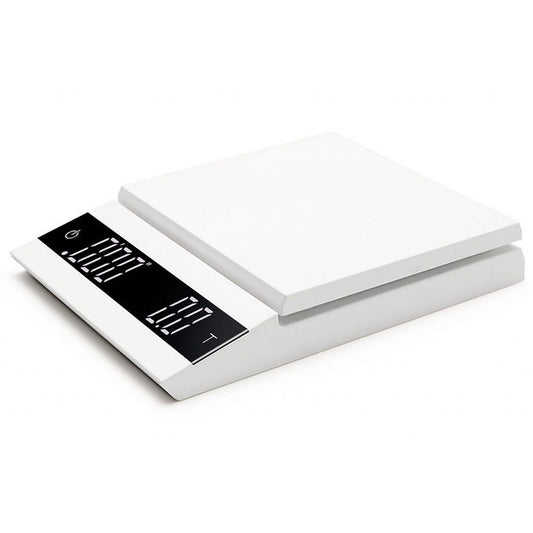
When pre-dosing (especially for espresso brewing, where margins are small), we always recommend checking out our guide to the best coffee scales so that you can get the maximum potential out of your frozen coffee.
Improves Grind Quality
Coffee ground from frozen is said to produce a slightly finer, more uniform particle size compared to an ambient temperature coffee being ground on the same setting. This has been observed by Dr. Christopher Hendon and Maxwell Colonna-Dashwood, who co-authored a paper on this very topic.
Frozen coffee can produce a narrower particle size distribution, which may improve extraction consistency and brew clarity. Naturally, this effect is most noticeable when using high quality grinding equipment, such as a roller mill, but also works well on a large number of coffee grinders suited to the home, such as those that appear on our Best Filter Coffee Grinders guide.
Reduces Waste
Arguably one of the most important reasons to freeze coffee. If a coffee oxidises and goes stale, you have less reason to brew it and it might end up being thrown away. Wasting what used to be a beautiful-tasting coffee is a tremendous shame, isn’t it?
Which Coffee Freezing Method Is Best?
If you're short on time, reusable containers are our preferred method for everyday use, while vacuum sealing remains the best choice for long-term archival storage.
| Method | Longevity | Convenience | Cost | Wastage | Best For |
|---|---|---|---|---|---|
| Vacuum Sealing | ★★★★★ | ★★☆☆☆ | ★★★☆☆ | ★★☆☆☆ | Long-term archiving and rare coffees |
| Reusable Containers | ★★★★☆ | ★★★★☆ | ★★★★☆ | ★★★★★ | Daily use and medium-term storage |
| Freezing Whole Bag | ★★☆☆☆ | ★★★★★ | ★★★★★ | ★★★★★ | Simple storage of unopened bags |
How Do You Freeze Coffee?
There are many different methods you can use to store coffee in the freezer and the right one for you will depend on what you want to prioritise.
Vacuum Sealing
Tom from the Manchester Coffee Archive believes vacuum sealing is the best way to freeze coffee long-term. By vacuum sealing, you’re removing most of the oxygen from the dose of coffee. The amount of oxygen that you remove is highly dependent on the quality of your vacuum sealer. Most domestic vacuum sealers will remove a great deal of air from the bag of coffee, but not the amount of air that a heavy-duty commercial one might do.
Regardless, removing any extra air at all and ensuring the seal is air-tight are the two most important things to consider when you're prioritising storing coffee long-term. Based on my own observations (as well as the observations from other sources such as the MCA), vacuum sealed doses of coffee retain their quality better than non-vacuum-sealed containers.
The primary downside of vacuum sealing is generating extra wastage, although I think it is best not to worry about it too much. Coffee is a very resource-intensive thing to produce and does have an impact on our planet, so any method to reduce the amount that we waste is beneficial. Polyethylene vacuum bags are accepted at soft plastic collections in supermarkets. As long as you reuse vacuum roll where possible and dispose responsibly, vacuum sealing coffee does have some socially-conscious benefits.
Pros Of Vacuum Sealing
- Best longevity
- Minimal oxygen inside
- Completely air-tight
- Most efficient in terms of freezer space
- You can pre-weigh your dose of coffee
- Used vacuum bags can sometimes be re-used
Cons Of Vacuum Sealing
- Time consuming to seal each dose
- Vacuum bags/rolls are limited by how much they can be reused
- Not all vacuum roll is made from a widely recycled material
- Not all vacuum sealers work with all vacuum rolls/bags
- Seals can fail, especially with cheaper sealers/improper usage

Individually portioned doses of vacuum-sealed coffee ready to be frozen
Freezing The Whole Bag
This one is pretty simple. Squeeze out all the air as much as you can, tape over the valve on the bag of coffee, chuck it into the freezer. It is arguably the most accessible way to freeze coffee, at the expense of being slightly limiting.
Pros Of Freezing The Whole Bag
- Time and resource efficient
- Freezer-space efficient
- No need to label the bag (just write the frozen date)
Cons Of Freezing The Whole Bag
- Coffee isn’t pre-dosed
- You have to defrost the entire bag before using (to avoid introducing condensation)
- Not all bag types are suitable (especially anything made out of porous material)
I would recommend freezing the whole bag when you’ve bought a little bit too much coffee to use at one go, or you’ve bought a couple of extra bags of a coffee that you particularly like.
If you also prefer to weigh your coffee straight out of the bag each morning rather than pre-dose in one go, this is also the best method for you.
Reusable Containers
This is my favourite way of freezing coffee for medium-term storage. Resealable containers can allow you to pre-dose coffee in a convenient way, trading off longevity slightly. While you can fill a container to the brim to eliminate headspace, there will still be a higher presence of oxygen within the container in comparison to a vacuum sealed bag.
There are many different options for reusable containers. A favourite of many coffee enthusiasts and professionals is the 50ml centrifuge tube. These are great for holding one dose of coffee, up to around 20 grams.
Pros Of Reusable Containers
- More affordable over time than purchasing single-use vacuum roll
- Less wasteful than vacuum sealing
- More time-efficient than vacuum sealing
- Allows you to pre-dose your coffee, removing the need to weigh your dose in the morning
- Different sized containers can be purchased, tailored to your needs
Cons Of Reusable Containers
- Less space efficient
- Not as good for long-term storage due to oxygen in the headspace
- Less time efficient than freezing the whole bag
- An extra thing to purchase
- Not all containers are air-tight enough/suitable for freezing
- Once you have dosed the coffee out, you cannot change the dose size
Reusable containers are a very solid choice if you just want to extend the window of peak flavour from your coffee, and don’t care about storing coffee long-term. Shop around and find the ideal container that suits the quantity of coffee you want to store, that is air-tight and fine to freeze. I would recommend looking at lab supply shops as well as checking out some purpose-made coffee ‘cellars’ from companies such as Weber and Normcore.

As I intend to brew these within the next couple of months, I keep them unlabeled in a ziplock bag with a cutout of the original label. The full details are recorded on a spreadsheet.
Freezing Coffee Best Practices
Grinding From Frozen
Not only can you grind coffee from frozen, but there’s evidence to suggest it is better to grind from frozen. Studies such as one conducted by Dr. Christopher Hendon and Maxwell Colonna-Dashwood conclude that frozen coffee produces a more uniform grind, and protects some of the more delicate compounds from the heat produced by friction during grinding.
If you're wondering whether grinding fresh really matters, we've also explored the differences between freshly ground and pre-ground coffee.
Frozen coffee can sometimes produce more static depending on the grinder and ambient conditions. If static is causing issues, our guide explains why RDT reduces static in coffee grinding.
Many people would recommend grinding slightly coarser when grinding from frozen. In my experience I find this is absolutely necessary for espresso, as you’re working with much finer increments - espresso brewers may also find our guide to the best coffee tampers useful. Conversely, grinding coarser is not as necessary for filter coffee brewing, even when trying to dial in my filter coffee recipes. I haven’t felt a need to grind much coarser, especially when using a grinder with limited stepped-adjustment.
Refreezing Defrosted Coffee - Debated
While I have been advised against it, I have found that refreezing coffee after it has already been frozen doesn’t affect the quality in a meaningful way. On more than one occasion I have thawed a vacuum-sealed kilo so I could portion it into centrifuge tubes when I didn't have enough containers available initially.
Roasted coffee has a moisture content of <5%, which is not enough to crystallise and noticeably impact the cell structure of the coffee beans. As long as you’re allowing the beans to thaw before transferring them to avoid condensation, there should not be a noticeable amount of change.

It is far more efficient to make up one big vac pack if you have a lot of one particular coffee. I might defrost this and refreeze in pre-dosed portions at a later time.
When Should You Freeze Coffee?
You want to freeze coffee ideally after that coffee has sufficiently degassed, but before the oxidation sets in. This is the peak flavour window and how many weeks rest you need to reach it highly depends on the coffee and how it was roasted. Generally with lighter roasts, 3–4 weeks would be the minimum I’d rest them. Remember, you can’t un-rest the coffee, so err on the side of slightly less rest to be safe.
The simpler but equally accurate answer is: Freeze the coffee when you think it tastes great.
Extra Tips For Success
However you want to store your coffee in the freezer–whether that be vacuum sealed, in reusable containers, or the whole bag–here are some tips to help you succeed.
Label Everything, And Label It Properly
‘Colombia natural’ or ‘Ethiopia washed’ aren’t sufficient labels (I used to be guilty of this). Include producer/farm names, varieties, lot names, altitude, region, flavour notes, and maybe even some notes on how to brew. Also include roast and freeze dates. I find that a little label maker does wonders, especially when individually freezing a lot of the same coffee.
Create A Database
You don’t have to put all the information directly on the label. Use a spreadsheet or document to keep track of the details. Remember freezing coffee is about preservation. The information is just as important as taste when it comes to revisiting the coffee later on. We've also compiled some of the best free coffee tools for tracking brews, recipes and coffee inventory.
Get A Dedicated Freezer
This is more of a quality of life suggestion, especially if you live with someone. They don’t want to excavate their dinner out from under portions of vacuum-sealed gesha.
Use A Bluetooth Thermometer, For Peace Of Mind
Using a thermometer can help you be sure that the freezer is staying at a cold enough temperature (around -18°C ideally) to properly store the coffee.
Once It's Sealed Keep It Sealed
Oxygen and moisture are enemies to freshness. Opening the container before you’re ready to brew will introduce both moisture and fresh air to the coffee–which is best to avoid.
Brew It!
Don’t be too precious about it. Freezing coffee is great at preserving it, but it isn’t fail-safe. If you wait for the perfect moment for too long, it might just pass before you get to enjoy the coffee at its best again. As much as I love freezing coffee, remember to celebrate coffee as a seasonal, fleeting product.
How I Freeze Coffee
I’ve used both a combination of vacuum sealing and reusable containers to freeze coffee in both coffee shop and home settings. Because both storage mediums excel in different places, I found that using both situationally was the best way to get the absolute most out of my frozen coffee storage.
For any coffee I am using daily or planning to use within the next 18 months, I prefer to pre-dose into 50ml centrifuge tubes. These work great for my dose range of 12-18g. My 18 month window for using these coffees means the headspace within the tubes is not a problem. For coffee I keep on-hand for more specific usage cases such as decaf for guests at home will also go in the tubes. These centrifuge tubes are also predominantly what I would use behind the coffee shop bar. Even if you’re not planning on keeping a coffee longer than a few months, they are great for holding the coffee in the peak flavour window, while being really easy to use during service.
Vacuum sealing is reserved for high-end coffees or anything I’d like to archive for future tasting long term. This allows me to store the coffee for longer, and use less freezer space while doing so. This is to reduce unnecessary waste and save time, as I don’t particularly fancy vacuum sealing so many coffees.

My London Coffee Festival haul has been separated into 50ml centrifuge tubes for short-term usage, and vacuumed portions for my long-term archive.
All coffee is labelled with the producer/farm name, region, variety, process, producer and roast & frozen dates. In a coffee shop setting, I would also record flavour descriptors and a guide on how to brew them, both of which I have started to include in my home freezer archive spreadsheet.

My long-term archive spreadsheet. Some of these were frozen before I started recording more detailed information.

My short term frozen coffee storage. Many of these will have a vacuum-sealed counterpart in the long-term archive.

Keeping record of how you brew each coffee will go a long way when it’s time to revisit them.
When it comes time to brew I grind straight from frozen, only adjusting the grind size to be a bit coarser if I’m on a grinder with stepless adjustment. Otherwise, I don’t make any other adjustments to my brew. Some people claim it is better to increase your brew temperature, which I personally don’t agree on. A dose of coffee has very little thermal mass, and will come up to room temperature very quickly once ground, and I also spend a bit of time removing chaff from the grounds (A tip we talk about at length in our guide to brewing better filter coffee) which does give the coffee a bit more opportunity to warm up.

My Timemore Sculptor 078S is stepless, so I grind slightly coarser when grinding beans from frozen.
Final Thoughts On Freezing Coffee
Freezing is an accessible way to extend the life of your coffee and I would highly recommend it to any specialty coffee enthusiast. The way I personally freeze coffee is perhaps overly complicated for most people, but that's arguably because we are using coffee beans worth freezing. In any case, you can easily take just a few things from this blog to freeze some coffee at home and get all the same benefits. Try a few different methods and find the one that works the best with how you like to brew coffee.
FAQs
Can Coffee Be Stored In The Freezer?
Yes. Providing you have sealed it correctly, the freezer is in fact the best place for coffee to be stored.
Why Should I Freeze Coffee?
Freezing coffee allows you to extend its peak freshness. If you’ve bought too much or aren’t able to drink it quickly enough, you should definitely think about putting some in the freezer.
Is Freezing Coffee Complicated?
It doesn’t have to be. Taping over the one-way valve of an unopened bag of coffee allows you to freeze it in its entirety. Alternatively, you could also get some reusable containers, enabling you to pre-dose and freeze single portions of coffee.
Can You Grind Frozen Coffee Beans?
Yes. Some people even claim it is better to grind beans from frozen, as it can give you a more uniform grind size. Many people also claim it is best to grind frozen beans a little bit coarser.
Can I Refreeze Coffee Once It Has Defrosted?
Yes. If I have a lot of one particular coffee, I’ll usually vacuum seal the whole thing then defrost, repackage, and refreeze it later on. It is useful when you’re short on individual containers.
Will Vacuum Sealing The Coffee Prolong Its Lifespan?
In theory, yes. The less oxygen in the container, the longer it will take for the coffee to oxidise. I myself have never side-by-side tested vacuum sealed coffee vs frozen in a reusable container, however.
Can You Freeze Coffee In The Original Bag?
Yes. If the bag is unopened, freezing the entire bag is often one of the easiest and most effective methods. We recommend removing excess air and covering the one-way valve before freezing.
Does Freezing Coffee Affect Flavour?
No. When frozen correctly, coffee retains its flavour remarkably well. In fact, freezing is one of the most effective ways to preserve coffee close to its peak flavour window. It's worth noting that grinding from frozen affects the particle distribution, but once you make the appropriate grind adjustments, this yields no tangible flavour impact.
Love What We Do Here?
Consider a Harmony coffee subscription for your home or office.

About The Author
Gage is a competition barista and was previously Head of Coffee for Sale Moon Coffee. He has spent a long time working with Harmony Coffee. He is a barista trainer, has trained many baristas, and has competed in countless coffee championships.