An exceptionally sweet and vibrant natural Red Bourbon from Burundi’s Migoti Mountain. Packed with notes of candied citrus, ripe blackberry, hibiscus, and black tea, Mutambu Lot 45 is a standout micro-lot designed for filter purists and adventurous espresso brewers alike.
Suitable for: Espresso & Filter Brewing
Best As: Espresso (Black / Milk), Filter (Black)
Flavour Characteristics
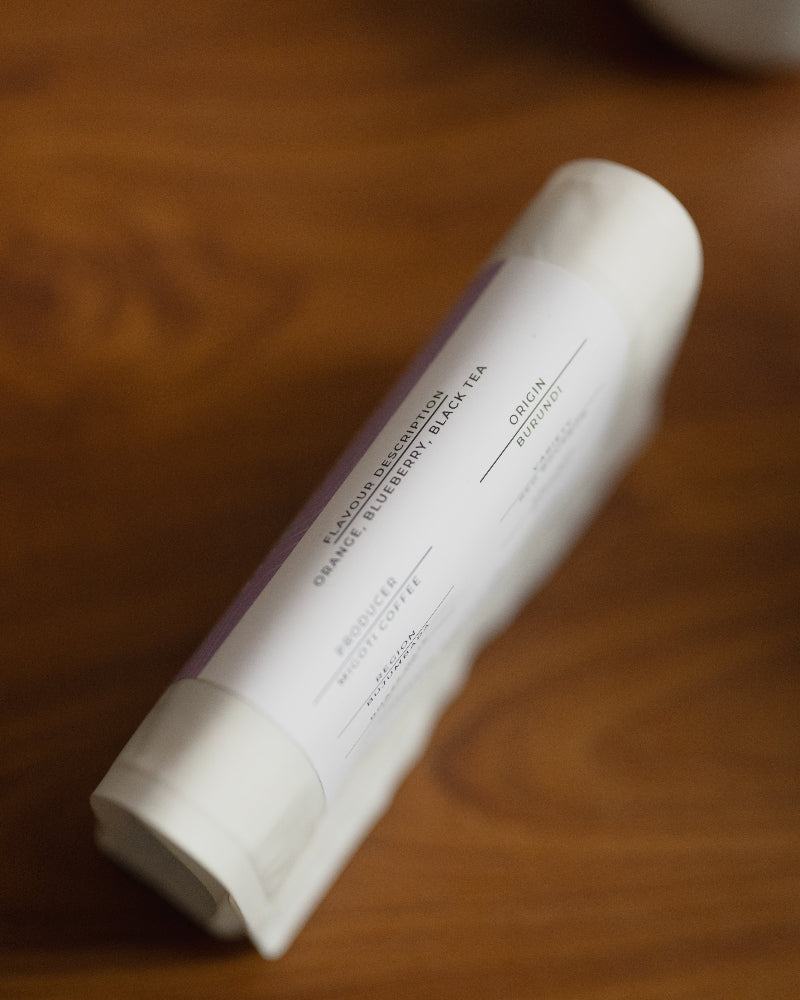
Flavour Profile: Candied Citrus Peel | Blackberry | Hibiscus | Black Tea
Origin & Producer Details
- Washing Station: Migoti Hill
- Station Manager: Zephyrin Banzubaze
- Region: Bujumbura, Burundi
- Variety: Red Bourbon
- Process: Natural
- Q-Score: 87
- Sourced Via: Omwani Importers
Recommended Rest
For the best-tasting brew of this speciality coffee from Burundi, we'd suggest resting this for 20–38 days off roast — read our full guide to resting coffee.
The Story Behind Migoti Coffee
The name “Migoti” comes from a local indigenous tree, which is also the name of the mountain where Migoti built their first coffee washing station.
This washing station operates in a region referred to as Migoti Mountain, in Mutambu Commune of Bujumbura Province, around 30 km from the centre of Burundi’s economic capital, Bujumbura.
Coffee Production in Burundi
A Complex Coffee History
Commercial coffee cultivation expanded in Burundi during the early 1900s and was heavily promoted under Belgian colonial rule, when farmers were compelled to grow coffee. The produce was bought and processed by the state before being exported primarily to Europe.
The sector was privatised in the 1960s, followed by a return to state control from 1976 to 1991, before another wave of privatisation began in 1991.
During and following Burundi’s civil war, which lasted from 1993 to 2005, coffee slowly emerged as a way to rebuild the country’s agrarian sector and increase foreign exchange. Investment increased alongside the development of both privately and state-run coffee companies.
However, after the political crisis of 2015 and the subsequent economic crash, the coffee sector struggled to fully meet its potential as a driver of economic growth.
Why Burundi Produces Exceptional Coffee
Burundi is among the smallest coffee-producing countries in East Africa. Despite its size, the country is endowed with ideal conditions for coffee production:
- Elevations of 1,500–2,000 MASL
- Widespread cultivation of Arabica Bourbon coffee trees
- Abundant rainfall
- Hundreds of thousands of smallholder farming families
Coffee is generally cultivated on small plots containing only a few hundred trees. Arabica accounts for the overwhelming majority of Burundi’s coffee production.
The Red Bourbon variety grown at high elevations in Burundi is characteristically sweet, with bright acidity, a full body, floral and citrus notes, and often complex wild spice characteristics.
The Migoti Coffee Company
Building the Washing Station
Migoti Coffee Company was founded in 2015, with its first coffee washing station established at Migoti Mountain the following year. The company partnered with industry experts who provided technical expertise and support.
Coffee trees are owned by the surrounding community, and Migoti purchases coffee cherries directly from the farmers who harvest and deliver them to the station.
Across the 2017, 2018 and 2019 harvests, more than 300 tonnes of green coffee were produced and exported from Migoti Mountain. These coffees achieved excellent cupping scores and were frequently recognised among the best speciality coffees coming out of Burundi.
Migoti now operates two washing stations: its original Migoti Mountain station and a second facility at Kinama.
Processing & Seasonal Work
The washing stations are operated by a local team of ten permanent staff members and more than 250 seasonal workers.
Station manager Zephyrin Banzubaze oversees the operation. His responsibilities include:
- Training coffee farmers
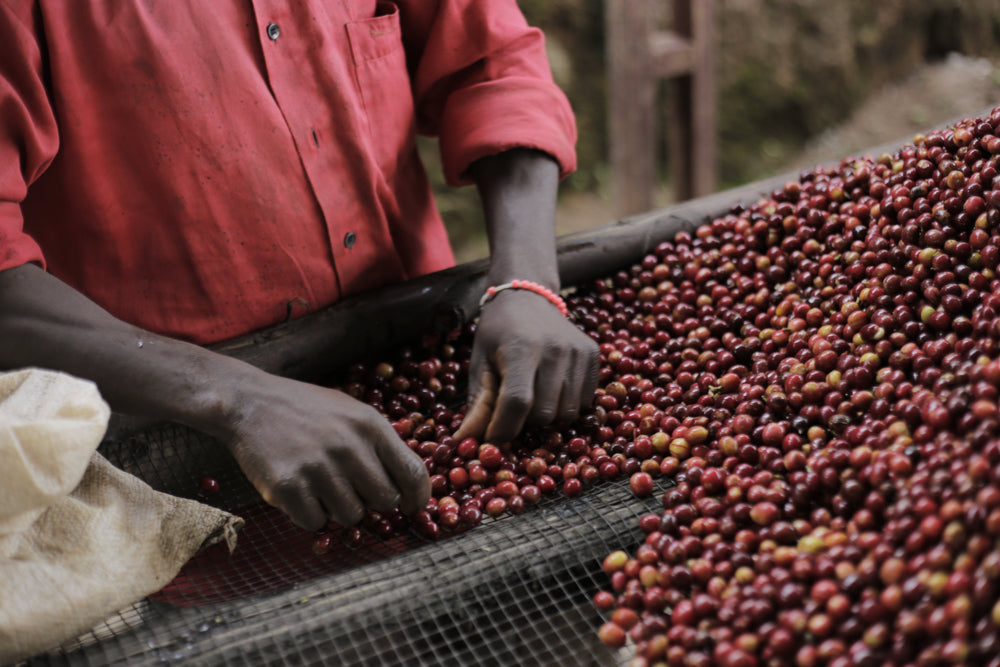
- Receiving and selecting coffee cherries
- Processing and drying coffee
- Storing dried parchment and preparing the coffee for dry milling
- Preparing green coffee for export
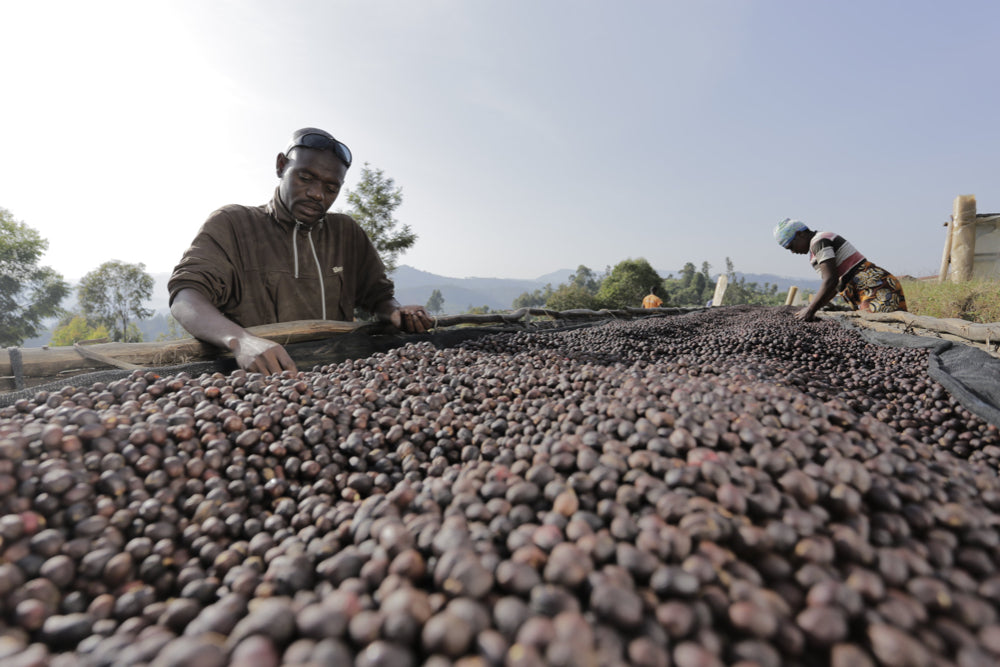
The majority of the seasonal workforce are women, who primarily work on the raised drying tables, carefully turning the coffee during drying and removing defective beans that could compromise cup quality.
Supporting Farmers & Sustainability
Migoti also supports farmers through ongoing education programmes focused on:
- Pruning and caring for coffee trees
- Intercropping
- Planting shade trees
- Using natural soil amendments
- Soil stabilisation
- Natural pest control methods
Migoti also provides coffee seedlings to local farmers, helping participating producers improve the health and productivity of their farms.
How Is Mutambu Lot 45 Processed?
Mutambu Lot 45 is a natural-process coffee. Once the ripe coffee cherries have been selected, they are dried with the fruit still surrounding the seed. The cherries are regularly turned during drying to encourage even moisture loss and reduce the risk of unwanted fermentation.
Leaving the fruit attached during drying can create a fruit-forward and intensely sweet flavour profile. In this coffee, that translates into notes of candied citrus peel, blackberry and hibiscus, supported by a clean black tea finish.
You can learn more about this method in our guide to coffee processing, or explore more coffees in our natural-process coffee collection.
How to Brew This Coffee
Dial In With Accuracy
Because this coffee is expressive and fruit-forward, accurate dose and yield help you hit the sweet spot. We strongly recommend using a reliable scale — see our guide to the best coffee scales and our bench favourite, the Felicita Parallel.
Brewing Tips
- Rest window: Follow the recommended 20–38 days off roast for the best clarity and balance.
- Filter brewing: Start with a 1:16–1:17 ratio and a medium-fine grind, adjusting to balance the candied citrus, blackberry, and floral characteristics.
- Espresso: Start with a longer ratio of approximately 1:2.2–1:2.4 to showcase the coffee's sweetness, berry notes, and clean finish.
- Starting recipe: Orea V4, 15.5g coffee, 250g water and a target brew time of approximately 2:20.
Explore More Recipes
To try more recipes from world-class coffee brewers, explore our guide to the best filter coffee recipes of 2026.
Mutambu Lot 45 FAQs
What does Mutambu Lot 45 taste like?
Mutambu Lot 45 delivers a vibrant, fruit-laden cup featuring candied citrus peel, juicy blackberry, and delicate hibiscus florals, finishing with a crisp black tea structure.
Is Mutambu Lot 45 suitable for espresso?
Yes, it extracts wonderfully for both black drinks and milk coffees. For espresso, pulling a slightly longer yield (around 1:2.2 to 1:2.4) highlights its bright citrus and berry character without overpowering acidity.
Can I brew Mutambu Lot 45 as filter coffee?
Definitely. A standard pour-over setup using a medium-fine grind and a 1:16 brew ratio allows its floral sweetness and tea-like clarity to shine.
How long should I rest Mutambu Lot 45?
We recommend allowing these beans to rest for 20 to 38 days post-roast. This resting window helps degas the coffee so you get optimal cup clarity and sweetness.
Where is Mutambu Lot 45 produced?
This micro-lot is grown in the Bujumbura Province of Burundi and processed under the care of Zephyrin Banzubaze at the Migoti Hill washing station.
What is natural-process coffee?
Natural processing means the coffee cherry is dried whole on raised beds with the fruit surrounding the seed, imparting intense natural sweetness and deep fruit flavors into the bean.
Explore Other Coffees
- San Sebastian – A washed Colombian coffee from Inzá, Cauca, produced by indigenous Paez smallholders. With notes of red berries, caramel and milk chocolate, it's an exceptionally versatile coffee that performs beautifully as both espresso and filter.
- El Vergel Decaf – Quite possibly the best decaf coffee we've ever found. It's called “Really Good Decaf” for a reason: world-class flavour without the buzz.
- El Diamante – An elegant Peruvian coffee with Silver Needle tea, red berries and maple sweetness. High-altitude growth delivers clarity, structure and refined acidity.
- Browse our single-origin coffees
Explore Our Coffee Collections
Love This Coffee?
Get coffees like this delivered on repeat with our coffee subscriptions.