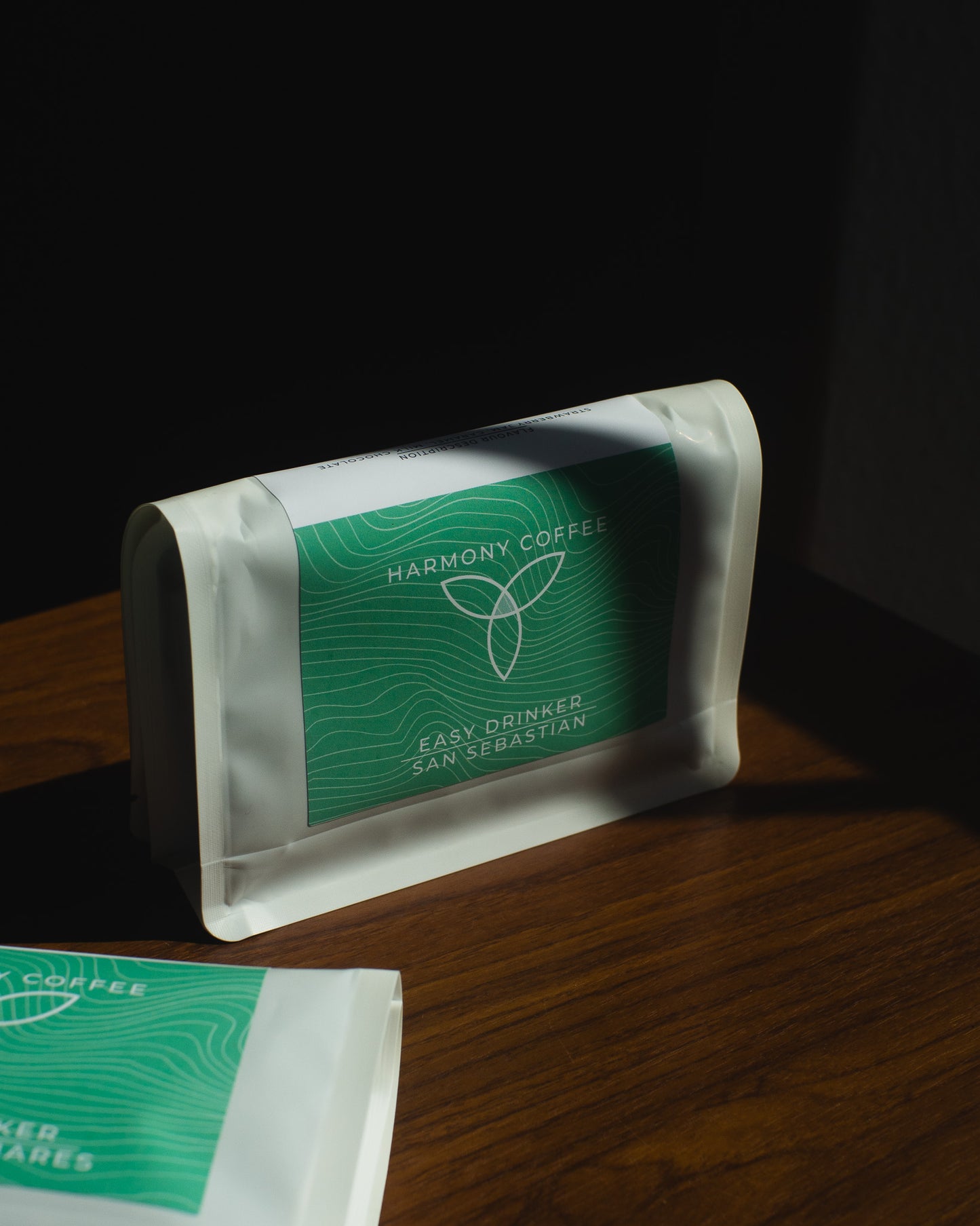
San Sebastian - Colombia Washed Coffee
Suitable for: Espresso & Filter Brewing
Best As: Espresso (Milk / Black), Filter (Black)
Flavour Characteristics
Red Berries, Caramel, Milk Chocolate
Origin & Producer Details
Producer: Local Smallholders
Region: Inza, Colombia
Variety: Caturra + Castillo
Process: Washed
Q-Score: 86
Sourced Via: Cofinet
Recommended Rest
For the best tasting brew of this specialty coffee from Colombia, we'd suggest resting this for 20–38 days off roast — we wrote a blog on this here.
Browse all Single Origin coffees
Check out our other Washed Coffee Beans
About San Sebastian
The Power of Community
This particular coffee is a fantastic example of what happens when local smallholders agglomerate together to produce something special. San Sebastián is not a single farm - the coffee is produced by the Paez, indigenous small holder growers local to Inza municipality. Typically, each smallholder cultivates on very small family operated farms, working between 0.5-1.5 arable hectares. Each farm holder cultivates almost exclusively Caturra and Castillo.
Inza is part of the Tierradentro region located on the western side of Cauca. The area sits on the Macizo Colombiano, which is a high altitude plateau in the far northern tail end of the Andes, known for its rich, mineral dense, volcanic soils, abundant water resources and year round, consistent climate conditions. In our opinion, this particular municipality has an incredible natural terroir expression of bright red fruits, caramel and milk chocolate - and with this particular coffee, if you really nail the brew, you might also pull out a little apricot and a balanced orange-like acidity.
About Cauca
Cauca is a coffee-producing region in the southwest of Colombia. Sitting high on the volcanic plateau of the Northern Andes and moderated by the cool, stable climate created by its proximity to the Pacific Ocean, Cauca benefits from one of the world's most remarkable natural terroirs for growing coffee.
- 1,700–2,350 MASL growing regions
- 1,500–2,000 mm annual rainfall
- Rich volcanic soils
- 17–23°C year-round temperatures
This combination of temperature stability, consistent rainfall and high altitude results in a slower maturation of the coffee cherries. This extended maturation allows the cherries to be steadily fed with nutrients as they develop, contributing to the unusually high Brix content that Cauca is famous for.
Approximate Breakdown of Colombian Coffee Varieties
| Variety | Approximate Percentage | Description |
|---|---|---|
| Castillo | 40–55% | Bred by Cenicafé for high yield and coffee leaf rust resistance. |
| Caturra | 20–30% | Previously dominant but now declining due to vulnerability to coffee leaf rust. Known for outstanding cup quality. |
| Variedad Colombia | 15–25% | An earlier rust-resistant variety that is still widely planted, although increasingly replaced by Castillo. |
| Typica & Bourbon | 3–8% | Traditional heirloom varieties grown primarily for specialty coffee due to their excellent cup quality despite lower yields. |
| Tabi | 1–3% | A rust-resistant hybrid developed for specialty coffee production. |
| Gesha, Pink Bourbon & Chiroso | <2% | Rare, high-value specialty varieties commonly grown for microlots and coffee competitions. |
Washed Processing
Most coffee in Colombia is produced using the washed method because it is reliable at scale and imparts fewer process-led flavours than honey or natural processing.
Washed processing begins by removing the outer layer of the coffee cherry, leaving the beans covered in a sticky layer of mucilage. The beans then undergo controlled fermentation, usually up to 36 hours, which breaks down the mucilage. Clean water is used to wash the coffee before the beans are dried on patios or raised beds until they reach the ideal moisture content for storage.
If you'd like to learn more, you can enjoy our extremely comprehensive coffee processing guide, which details all of the coffee processes that you're likely to encounter.
Major Coffee Growing Regions of Colombia
Colombia's vast size, dramatic mountain ranges and varied microclimates mean that no two coffee-growing regions are quite the same. Differences in altitude, rainfall, soil composition and local climate all influence how coffee develops, giving each region its own distinctive flavour profile.
Although every farm and producer is unique, the table below provides a general overview of what you can typically expect from some of Colombia's best-known coffee-producing regions.
| Region | Altitude | Typical Flavour Profile | Known For |
|---|---|---|---|
| Huila | 1,500–2,000 MASL | Stone fruit, florals, citrus, panela | Exceptional sweetness and vibrant acidity |
| Cauca | 1,700–2,300 MASL | Red berries, caramel, milk chocolate | Volcanic soils and long cherry maturation |
| Tolima | 1,400–2,100 MASL | Apple, tropical fruit, chocolate | Balanced, approachable coffees with excellent sweetness |
| Nariño | 1,800–2,300 MASL | Citrus, florals, stone fruit | Very high-altitude coffees with elegant acidity |
| Antioquia | 1,300–2,000 MASL | Chocolate, caramel, subtle citrus | Classic, balanced Colombian profiles |
| Sierra Nevada | 900–1,900 MASL | Cocoa, spice, dried fruit | Coffee grown by indigenous communities in a unique coastal mountain range |
While these flavour profiles provide a useful guide, the coffee variety, processing method and individual producer will often have an even greater influence on the final cup. Colombia's diversity is one of the reasons it remains one of the world's most exciting coffee-producing origins.
For more information, the interested reader can check out our Cultivation and Harvest guide to Colombia.
Preparation Guidance
Preparing this coffee depends a little bit on your equipment and your water quality.
Espresso Brewing Guidance
San Sebastian works beautifully as espresso. You can expect a very silky, sweet cup of coffee that works well as a black or milk-based drink.
For best results, we recommend trying the following recipe as a starting point, before adjusting to taste accordingly:
- Dose: 18g
- Yield: 40g
- Target Brew Time: 28 Seconds
- Water Temperature: 94 °C
On our equipment, this recipe repeatedly produced the sweetest, most balanced cups of espresso, yielding bright red fruits and sweet caramels.
Alternative Recipes:
We have been brewing this coffee using a number of recipes (depending on your equipment), as it's incredibly versatile. It's worth noting that if you are running turbo shots, you need a coffee grinder with a burr set fitted that allows for a more unimodal style of grind size particle distribution, otherwise your coffee will likely taste very ashy at these lengths. It's also a good idea to have a really good set of scales (we wrote a guide on this here) to allow for accurate, repeatable results.
Filter Brewing Guidance
For filter, consider brewing at around a 1:16 ratio. We've tried a number of different brew methods, and personally I really like this coffee through the Hario Switch, as you can really bring out a little more Body this way.
Our Hario Switch Recipe
- Dose: 16g
- Total Brewing Water: 255g
-
Water Temperature: 94 °C
- Make sure the stopper is engaged so no water can come out
- At 0:00, Pour all the water at once, then do nothing until 3:45.
- At 3:45, take a spoon and stir the surface three times in the same direction to break the crust and get the liquid spinning
- Press the switch and drain the liquid completely
- Target Brew Time: 5:00
If you don't have a Hario Switch, or want to try more recipes, feel free to try some of our other recommended recipes here.
Iced Coffee
Because San Sebastián has a little more development than many of our other coffees, while still being somewhat light and bright, this makes it the perfect candidate for Iced Coffee. For methodology and preparation guidance, you can enjoy our Ultimate Iced Pour Over Recipe for a quick and easy brew.
Once It's Rested, Freeze It
Once this coffee has reached its peak flavour window, there's no need to worry about drinking it all before it starts to decline. If you've bought multiple bags, or simply enjoy switching between different coffees, freezing is one of the best ways to preserve flavour for months.
Done correctly, freezing dramatically slows oxidation while keeping the coffee much closer to its peak flavour. We generally recommend allowing the coffee to rest first before freezing it in an airtight container or vacuum-sealed bag, then grinding it straight from frozen when you're ready to brew.
We've put together a comprehensive guide covering when to freeze coffee, the best storage methods, grinding from frozen, and the techniques we've developed over years of freezing exceptional coffees. You can read our Ultimate Guide to Freezing Coffee here.
San Sebastian – FAQs
Is this coffee good for espresso?
Yes — this coffee is suitable for espresso. You can make this as a milk-based espresso drink or a black drink, it will shine equally as both.
Can I brew this as filter?
Absolutely. It performs well as a filter coffee. Consider an immersion-based brewing method to get the best results.
Why rest this coffee for 20–38 days?
Resting allows the roasted CO₂ to outgas, helping sweetness and clarity develop in the cup. We explain the science in our blog linked above. You can brew it sooner than 20 days, but you won't get the absolute most out of your experience.
What flavour profile should I expect?
Red Berries, Caramel & Milk Chocolate.
Why did you buy from Colombia?
Colombia is an exemplary location to source great coffee from. There is a huge biodiversity within the country, and an experimental attitude amongst the growing communities. This lets us (as consumers and coffee enjoyers) to benefit from a huge range of varieties, processing methods and cultivation techniques that have been developed across multiple generations.
When it comes to quality and the ability to develop stable, high-quality farm level partnerships, Colombia has to be near the top of any roaster's list.
What does Colombian Coffee Taste like?
Coffee from Colombia often tastes super sweet. The defining features of Colombian coffees tend to be Berry and Caramel, with some regions yielding more citrus, some regions yielding softer, fleshy fruits and some regions yielding more chocolate.
Explore other exciting coffees
-
El Diamante - Elegant Peruvian coffee with Silver Needle tea, red berries, and maple sweetness. High altitude growth delivers clarity, structure, and refined acidity.
- Musaza Lot 3 - A bright and fruit-forward Rwanda natural Red Bourbon from Rwamatamu, offering layered citrus and stone fruit complexity. Tangerine, apricot and grapefruit notes are complemented by honeyed sweetness and a clean black tea finish, making it versatile for both filter and espresso.
- El Vergel Decaf - Quite possibly the best decaf coffee we've ever found. It's called 'Really good decaf' for a reason. World class flavour, without the buzz.
- Kibaya — Rwanda washed Red Bourbon. A very high-clarity washed lot with citrusy and black tea characteristics.
- Beatriz Guimares — a vibrant anaerobic natural Red Bourbon from Fazenda Lavrinha in Minas Gerais, Brazil, with notes of honeydew melon, pear drops, macadamia and milk chocolate.
- Migoti Lot 228 - A gorgeous, bright, effervescent Burundi washed red bourbon coffee from our friends at Migoti. This coffee tastes like candied citrus peel, hibiscus, blackberry & black tea!
- Jairo Arcila Chiroso - An unbelievably complex and rich Chiroso from Jairo Arcila, Colombia. This particular coffee tastes like clementine, honeydew melon & eucalyptus.
- San Augustin Sidra - Quite possibly the highest quality we've ever come across. An unbelievably complex natural Sidra from Alfonso and the team at San Augustin, Ecuador. This coffee helps us celebrate our 4th Birthday and tastes like Raspberry Jam and Strawberry Quality Street!
- Browse our single-origin coffees
Love this coffee?
Get coffees like this delivered on repeat with our Single Origin Subscription.
Check out more of our collections
Espresso coffee beans collection
Filter coffee beans collection
Why Choose San Sebastian?
- Responsibly Sourced – Transparent supply chain and sustainably produced coffee.
- Supporting Smallholders – Helping small producers access specialty markets.
- Full Traceability – Fully traceable, specialty-grade, small-lot production with high-quality control.
- Roasted to perfection on precision equipment – Small-batch, convection roasted for clarity and sweetness.
- Free UK Delivery over £20
What do our customers have to say about it?
“Our customers love these coffee beans in particular. It works great with milk, and we've had endless positive feedback.”
“Reyt tasty and quaffable”
"Perfect for batch brew"