What is Sidra?
Sidra is an Arabica coffee variety known for its florality, high sweetness and expressive cup profiles.
It is considered a high-end specialty coffee cultivar within the Coffea arabica species, often used in competition settings due to its complex flavour profile and high cup quality potential.
In a Nutshell
The Sidra coffee variety (also known as Sydra / Bourbon Sidra) is a rare and highly sought after cultivar of the C. Arabica species.
Certainly the classic Sidra flavour profile gives a nod to a bright, intense florality, silky texture, citrusy acidity and (in naturals) tropical and berry fruit sweetness, making it one of the more expressive coffee varieties.
It first came to prominence in 2019 after Jooyeon Jeon of Momos Coffee used a Sidra in her World Barista Championship routine, which led to her being crowned World Barista Champion.
Sidra's status as the 'Gesha Slayer' was cemented further when Anthony Douglas of Axil Coffee achieved the same feat just three years later, winning the 2022 World Barista Championships, also using a Sidra during his routine.
Before this, the status of Sidra was relatively unknown, and it was almost exclusively available from Ecuadorian coffee farms (mostly in Pichincha).
I'll be transparent... Sidra has become one of my all time favourite coffee varieties. As time has gone on, we have gradually started offering more and more Sidra coffee beans, from an increased range of origins, as the variety begins to impress us more and more.

What does Sidra coffee taste like?
Sidra is one of the more expressive and dynamic coffee varieties when it comes to flavour, but it can also be one of the hardest to neatly define.
At its core, Sidra tends to present a very bright and articulate cup profile.
Washed Sidra
In washed lots, you’ll often find a combination of:
- Pronounced florality
- Citrus and malic acidity (think apple, white grape)
- Silky, almost creamy texture
- High sweetness with a very clean finish
Natural Sidra
In naturally processed Sidras, this profile can shift quite dramatically. The fruit character becomes much more dominant, often presenting as:
- Tropical fruit
- Berry-forward sweetness
- Wine-like or fermented complexity
Adaptability
What’s particularly interesting about Sidra is how adaptable it is. Unlike varieties like Gesha, which tend to carry a very recognisable and consistent “hallmark”, Sidra seems to respond much more to its environment and processing method.
In practical terms, this means:
- A washed Sidra from Ecuador might lean towards clarity, florality and citrus structure
- A natural Sidra from Colombia might be intensely fruity, sweet and almost jam-like
Because of this, Sidra doesn’t always announce itself in the cup in the same way that Gesha does; rather, it offers a broader spectrum of possible flavour outcomes — often shaped more heavily by terroir and processing than by the variety alone.
That said, when the stars align, Sidra is capable of producing unbelievably expressive cups of coffee, unlike almost any other coffee variety that I have come across.

Photo - Brewing Edinson Argote Sidra
What is the origin of Sidra coffee?
Unlike many varieties, there is actually a lot of debate surrounding the origins of Sidra, and also a lot of debate surrounding Sidra's genetic lineage.
To provide some clarification: up until a few years ago, the consensus was that Sidra was a hybrid cultivar, produced in laboratory settings by Nestlé by cross-breeding Bourbon and Typica. Nicknames for the variety (like Bourbon Sidra) nod to the legitimacy of this story...
However!
The broader consensus these days is based on some recent genetic testing, which has identified that Sidra derives from Ecuadorian grown Ethiopian landraces, which have acclimatised to the local terroir and demands of the region across a significant enough span of time.
Modern Sidra, now grown in other countries, derives from the Ecuadorian seed stock, and so a more concrete definition of the variety is gradually being fleshed out. In either case, it's an exciting time to be a Sidra lover, as more and more farms have begun introducing the variety into their farms to enrich the diversity of offering and to push for more competition-grade production.
Where is Sidra grown?
As with almost all coffee varieties, Sidra grows in equatorial regions, in an altitude range generally between 1400 - 2200 MASL, making it one of the higher grown coffee varieties.
Primarily, Sidra is grown in Ecuador, but as time has gone on, we are seeing more and more Sidra coffees popping up from Colombia, Peru and other South American countries.
The origin of the modern variety that we know today is credited with being the Pichincha region of Northern Ecuador, a region benefitting from highly fertile volcanic soils, just south of Imbabura and the Ecuadorian/Colombian border.
Where the variety is still relatively new, not too much information is public knowledge about the ideal growing conditions for the production of Sidra, but I'll provide a brief reference to this article by Perfect Daily Grind where Pepe Jijón of Finca Soledad talks briefly about the challenges associated with Sidra cultivation. The interested reader should read this full segment, but I will also summarise here:
- Sidra requires shade and a local ecosystem to grow successfully.
- Sidra produces high yields.
- Sidra is vulnerable to leaf rust (Hemileia vastatrix), Ceratocystis fimbriata and coffee berry disease.
- Sidra is a strong, sturdy tree, which can grow up to 4 metres tall.

Where Can I Buy Sidra Coffee?
You can actually buy Sidra on our website most of the time. It's one of our favourite varieties and we so we stock it more frequently than many other coffees - as luck would have it, Consuelo Rubio Sidra is currently available.
How is Sidra Grown and Harvested?
When Sidra grows on the coffee plant, the berries it forms are bright red when fully ripe and (as noted by Pepe) the coffee cherries grow in densely packed cherry clusters, with lots of cherries growing on each branch, leading to high yields from this plant.
The cherries themselves are large, long and pointed at one end. When pulped, this reveals the distinct 'tear drop' shape that Sidra coffee beans are most frequently associated with.
Sidra tends to follow a similar cultivation timeline to most Arabica coffee varieties, but is often a little slower to mature as a result of how high it's grown.
Typical Maturation Timeline
- 0-1 years old: Establishment phase (root development)
- 2-3 years old: First small crop (usually very limited yield)
- 3-5 years old: Fully productive with consistent fruiting
Is Sidra Hard to Roast?
A huge part of this section leans on our experiences roasting Sidra. To date, we have released 9 different Sidra coffees, and I roasted countless more at my previous job.
The higher altitudes that Sidra is typically grown in result in slower cherry development than other coffees. This longer maturation time results in a higher Brix and more cellular development, which gives a very tight bean structure. In spite of the size, Sidra produces a dense, hard bean.
High density, big, hard beans in tandem is a relatively rare combination - usually reserved for varieties like SL28. This presents some challenges to roasting.
Normally, coffees like this can take quite a lot of heat early on in the roast and benefit from a higher charge temperature, but with Sidra, there is an added complexity due to the shape of the bean. The pointy nature of the bean can lead to uneven roasting on the exposed tips (tipping), which distinctly taints the flavour of the coffee.
Therefore, there is quite a fine balance between not giving the coffee enough momentum early in the roast and causing tipping. If you are lazy with your heat application, because you have a big, high density bean, the internals of the coffee can be cooler than the exterior - this problem is particularly exacerbated if you are not applying heat assertively enough, and can result in quite a severe crash in the rate of rise shortly after first crack. This is particularly prevalent if the farm is particularly high grown, high screen size and if the coffee is a washed process.
Naturally processed Sidras tend to be a little bit softer, and do not need as much momentum at the start of the roast. Again, tipping can cause issues if you aren't careful. One additional note - the migration of sugars can result in a very high Brix, which can produce a rapid and intense Maillard reaction. If you get carried away with dropping the coffee at a particular external bean colour metric, you might find that the internals of the coffee are not properly developed - which is why it's much more important to use internal colour as your metric of choice.
Top Tips For Roasting A Sidra
- Watch For Tipping - These are high density, strangely shaped beans with exposed tips. Depending on your type of roaster, you should consider making adjustments to how you apply heat early on.
- Prioritise Internal Colour Readings - Sidra can develop surface colour quickly due to high sugar content undergoing the Maillard reaction. Internal colour is a better metric of your true roast level.
- Consider A Gas Dip - If your coffee is consistently crashing after first crack, consider a dip in gas 25-30 seconds before first crack, and bring the gas back up shortly after. Scott Rao's Roasting Best Practices goes into depth on this technique.
- Adjust Approach For Processing Method - Naturals tend to be softer and require less initial energy, while washed Sidras benefit from more momentum earlier in the roast.
Overall, Sidra can be a very tough coffee to roast well, but it rewards precision unlike any other variety I've worked with.

Sidra Vs Gesha - What's the difference?
In short: Sidra tends to be more fruit-driven, adaptable and higher yielding, while Gesha is more floral, tea-like and consistent in profile.
Occasionally you might hear Sidra coined as the next 'Gesha Killer'. But what are the actual, tangible similarities and differences between these two varieties?
Before we talk about how these two varieties differ, it's always a good idea to mention briefly how they are similar.
- Both Gesha and Sidra delineate from Ethiopian Heirlooms (although debated) and arrived in South America in the mid-20th century.
- Both Gesha and Sidra share a lot of similar 'Ethiopian' flavour characteristics - high acidity, high sweetness, silky body and big florals.
- Both are big plants that produce big beans with extremely, extremely high quality potential.
- Both sprang into fame as a result of their competition performance (Gesha's rise during the 2004 Panama Auction and Sidra's rise during the 2019 World Barista Championships).
But now, let's talk about how they are different.
- Gesha is a notoriously stubborn plant, with low yield - whereas Sidra is a much higher yielding plant. Sidra also produces longer, pointier beans than Gesha, whereas Gesha produces beans that are more oval shaped.
- Sidra has a noticeably higher bean density and bean hardness than Gesha.
- Sidra is more susceptible to tipping than Gesha.
- Gesha is generally considered to be more silky, floral and tea-like. The flavours are generally very distinct and the acidity tends to be a bit more obvious, whereas Sidra is considered to have a more voluptuous body and the acidity tends more in the direction of fruit and berry sweetness. Both varieties can be incredibly floral.
The biggest subjective difference for me is definitely the 'hallmark' of the coffee.
It's hard to put this into words, but I will word it like this:
Regardless of the coffee's origin and processing method (although more heavily processed coffees are harder to identify), it is so obvious to me when I am tasting a Gesha, even in a blind setting. The tactile quality of Gesha is so unique and distinct that it's unmistakable, and no other varieties seem to mimic that.
Sidra does not (in my opinion) have a distinctive, identifying hallmark that transcends processing method and terroir in the same way that Gesha does. All of the Sidras that I have tried have all tasted and felt different to one another. My takeaway from this is that Sidra is more adaptable to changes in terroir and processing and offers a wider multiplicity of flavours that can be generated.
Regardless, it's unmistakable that both varieties are capable of extremely high output cup quality.

The Rarity of Sidra Coffee Beans
Sidra is a lot more common than it used to be (pretty much exclusively being grown in Ecuador until very recently), but the cultivation of the variety is nowhere near as widespread as other varieties like Caturra, Bourbon, Typica, Gesha etc.
While the variety is becoming more common, it still remains almost exclusively grown in Colombia and Ecuador and is certainly extremely, extremely rare to find outside of South America (I have never had a Sidra grown outside South America).
Is Sidra coffee expensive?
In spite of the rarity of this variety and its relatively recent rise to fame, high quality Sidra remains surprisingly cheap when compared with other competition-level cultivars like Gesha, Laurina and Eugenoides.
Sidra is regularly part of our coffee offer list, most recently with our featured Sidra from Arturo Arango, precisely because we always feel like the variety delivers exceptional value for the end customer, relative to the quality that you get.
I would say that Sidra is surprisingly affordable, especially given the quality potential that this variety is capable of.
How to Brew Sidra Coffee
In spite of the difficulty that Sidra coffees can give a roaster, they are actually surprisingly simple to brew. A variety like Sidra benefits from brew methods that promote its natural characteristics.
The coffee itself tends to give great structure and body, in addition to loud, remarkably clear flavours. The high density leads to a high extraction potential, which really opens the door to a number of different approaches.
Our Favourite Brew Recipe for Brewing Sidra Coffee Beans
Orea v4, 16g coffee, 250g water, 2:30 brew time.
I'm using a higher dose than usual on this coffee variety because it tends to give up its soluble material more easily, so we can brew quite quickly, up-dose and still achieve a balanced filter brew.
For other recipe inspiration, check out this blog.
If you enjoy reading about rare, expressive coffee varieties, you may also enjoy our guide to Pink Bourbon coffee.
Final Thoughts on Sidra Coffee
Sidra is, without question, one of the most exciting coffee varieties to emerge in recent years.
Between its rapid rise through competition, its complex and somewhat mysterious genetic background, and its ability to produce truly exceptional cup quality, it occupies a very unique position in the world of specialty coffee.
What makes Sidra particularly compelling is its versatility. It doesn’t present as a one-dimensional coffee variety; instead, it acts like a blank canvas for terroir, processing and stylistic preference of the producer. Sidra is capable of producing wildly different but equally impressive results.
From a roasting perspective, it demands precision and attention to detail, but when handled correctly, the reward is a cup profile that is expressive, vibrant and memorable.
As more producers continue to experiment with Sidra across different origins and processing methods, it feels like we are only just beginning to understand the true potential of this variety.
For now, whether you’re brewing it, roasting it, or simply enjoying it, Sidra remains one of the most exciting coffees you can get your hands on.
Frequently Asked Questions
What is Sidra coffee?
Sidra is an Arabica coffee variety known for its florality, high sweetness and expressive cup profiles. It is considered a high-end specialty coffee cultivar within the Coffea arabica species, often used in competition settings due to its complex flavour profile and high cup quality potential.
What does Sidra coffee taste like?
Sidra is one of the more expressive and dynamic coffee varieties when it comes to flavour, but it can also be one of the hardest to neatly define. At its core, Sidra tends to present a very bright and articulate cup profile. In washed lots, you’ll often find pronounced florality, citrus and malic acidity, silky texture and high sweetness with a very clean finish. In naturally processed Sidras, the fruit character can become much more dominant, often presenting as tropical fruit, berry-forward sweetness and wine-like complexity.
Is Sidra coffee floral?
Yes — Sidra is typically a very floral coffee variety. Certainly the classic Sidra flavour profile gives a nod to a bright, intense florality, and this is one of the reasons the variety has become so popular in specialty coffee and competition settings.
Is Sidra coffee sweet?
Yes. High sweetness is one of the defining traits of Sidra. Depending on the origin and processing method, that sweetness can present as clean and elegant in washed coffees, or as more tropical, berry-like and fruit-forward in naturally processed lots.
What is the origin of Sidra coffee?
There is actually a lot of debate surrounding the origins of Sidra, and also a lot of debate surrounding Sidra’s genetic lineage. Up until a few years ago, the consensus was that Sidra was a hybrid cultivar, produced in laboratory settings by Nestlé by cross-breeding Bourbon and Typica. However, the broader consensus these days is based on some recent genetic testing, which has identified that Sidra derives from Ecuadorian grown Ethiopian landraces.
Where is Sidra coffee grown?
Primarily, Sidra is grown in Ecuador, but as time has gone on, we are seeing more and more Sidra coffees popping up from Colombia, Peru and other South American countries. The modern variety is most strongly associated with Ecuador, particularly the Pichincha region of Northern Ecuador.
Why is Sidra coffee so highly regarded?
Sidra is highly regarded because it combines very high cup quality potential with an expressive and dynamic flavour profile. It also became especially well known after being used in high-profile competition routines, most notably by Jooyeon Jeon in 2019 and Anthony Douglas in 2022.
What is the difference between Sidra and Gesha?
In short: Sidra tends to be more fruit-driven, adaptable and higher yielding, while Gesha is more floral, tea-like and consistent in profile. Gesha is also generally thought of as having a more distinctive hallmark in the cup, whereas Sidra seems more adaptable to terroir and processing, offering a wider multiplicity of flavours.
Is Sidra coffee rare?
Yes — Sidra is still a relatively rare coffee variety. It is a lot more common than it used to be, but the cultivation of the variety is nowhere near as widespread as other varieties like Caturra, Bourbon, Typica or Gesha. It still remains almost exclusively grown in Colombia and Ecuador, and is extremely rare to find outside of South America.
Is Sidra coffee expensive?
In spite of the rarity of this variety and its relatively recent rise to fame, high quality Sidra remains surprisingly affordable when compared with other competition-level cultivars like Gesha, Laurina and Eugenoides. That is part of what makes Sidra such an exciting variety — it can deliver exceptional value relative to the quality you get.
How should I brew Sidra coffee?
Sidra is actually surprisingly simple to brew. A variety like Sidra benefits from brew methods that promote its natural characteristics. It tends to give great structure and body, in addition to loud, remarkably clear flavours. The high density leads to a high extraction potential, which opens the door to a number of different brewing approaches.
Take your brewing game to the next level:
Espresso lovers can also find our guide on the Best Coffee Tampers here.
Filter coffee lovers can find our guide on the Best Pourover Filter Coffee Recipes here.
Find some of the best free tools to accompany your brews here.
Find your perfect coffee from Harmony's selection of coffee beans here.
Check out our guide on resting coffee to get the most out of your brews here.
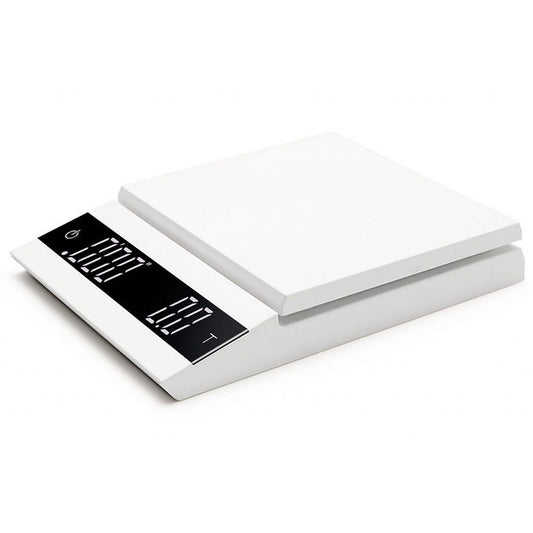
Find the Best Coffee Scales here.
Learn about why RDT reduces static in coffee grinding here.
Does grinding fresh matter? Or is Pre-ground coffee ok?
Love what we do here?
Consider a Harmony coffee subscription for your home or office!

About the Author
Ben is the Head of Coffee at Harmony Coffee, a competition barista and trainer with over a decade in specialty coffee. He’s trained hundreds of baristas, competed in UK coffee championships, and spends an unreasonable amount of time writing about coffee varieties.