Harmony Coffee Roaster
DIOFANOR RUIZ GESHA
Couldn't load pickup availability
Diofanor Ruiz – Colombia Washed Gesha
Flavour Characteristics
Best As: Filter Coffee / Black espresso drinks
Flavour Description: Jasmine, Tangerine Acidity, Apricot, Intense Florality
Origin & Producer Details
Producer: Diofanor Ruiz
Farm: La Divisa
Origin: Colombia
Region: Buenavista, Quindio
Variety: Gesha
Process: Washed
Q-Score: 89.50
Suitable For & Recommended Rest
SUITABLE FOR: ESPRESSO & FILTER BREW METHODS
BEST AS: ESPRESSO (Black) & FILTER (Black)
Recommended rest: For the best tasting results, we recommend brewing this particular coffee 28–55 days off roast. You can read more about resting coffee here.
Check out our other Washed Coffee Beans
About Diofanor Ruiz
Diofanor Ruiz grew up in a traditional coffee farming family, where life was closely intertwined with the intricacies of coffee production. From a young age Diofanor was involved in farm work, quickly learning the ropes of the industry, which would later lead him to pursue a life-long career in coffee cultivation. In 2003, Diofanor became a certified coffee farmer, continuing the work that had shaped his upbringing.
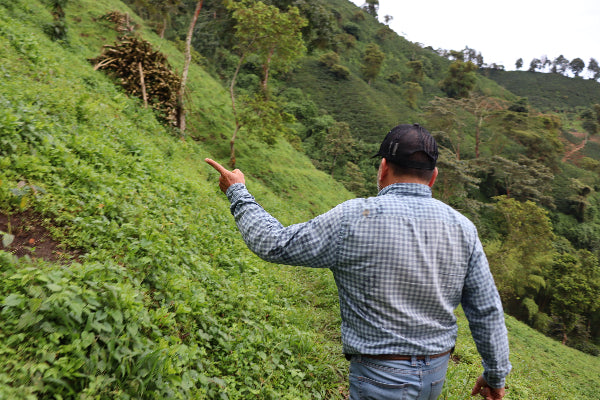
Two years later, in 2005, he was able to purchase his own farm, La Divisa, in Buenavista, Quindio. Sitting at around 1950 metres above sea level and spanning 14 hectares, the farm is now home to Diofanor, his wife, and their son, who is currently studying agroforestry engineering.
At La Divisa, Diofanor has planted a wide range of fruit and native trees alongside his coffee. Bananas, mandarins, guava and oranges grow among the coffee plants, while native species such as Guamo, Guayacanes and Tigua provide shade and help improve soil health.
Many coffee farmers in rural Colombia don't really benefit from access to roasting equipment or machinery, and so it wasn't until late 2005 that Diofanor tasted his own coffee for the first time. Inspired by the experience, he began moving away from traditional methods and dedicated his efforts to quality-driven practices. This change in philosophy has led Diofanor to become one of the region's most respected coffee producers.
This washed Gesha from Diofanor Ruiz stood out immediately on the cupping table. The aromatics are intensely floral, with jasmine and citrus notes that open into a soft stone fruit sweetness. It’s a beautifully expressive example of Colombian Gesha and a coffee we’re very excited to share.
Coffees like this are the result of years of work at origin. We’re proud to source from Diofanor through Cofinet, who work closely with producers across Colombia to support quality-driven farming and long term sustainability.
About The Gesha Variety
Gesha (or Geisha) is often regarded as the most highly sought after variety in coffee, famed for its distinct florality, unique tactility and clarity of flavour. Many believe that the best origin for Gesha is Panama, but as I expressed in my interview with Perfect Daily Grind - it's my fundamental belief that phenomenally high quality Gesha can be found anywhere - reminiscent of Ratatouille's 'Anyone Can Cook'.
The original lineage of Gesha traces back to seeds collected in rural Ethiopia in the 1930s - it's commonly referred to as Gesha, sharing a name with a nearby mountain where it was first discovered. When logged, it was noted that Gesha was moderately resistant to leaf rust, and as such, a number of saplings were first planted in Panama during the 1960s. But various impracticalities of the variety made it initially undesirable - a low planting density, brittle branches and low yield made it a poor choice for many farmers.
It wasn't until the 2005 Panama auction that this variety found itself in the spotlight of international regard, where the Peterson family entered their Gesha into the competition. Not only did it achieve extremely high scores, but its distinct florality and high acidity attracted a number of high bids from auction attendees, breaking the standing auction green coffee price record. Since the quality potential of Gesha was revealed to the world, it has found itself as a staple on the offer lists of the world's greatest roasteries.
About Quindio
Quindio is one of Colombia's most celebrated coffee growing regions - known for its rich volcanic soils, high altitude climate and breathtaking landscapes. The region is home to many world-leading coffee farms that are capable of producing unbelievably high-quality coffees, thanks in no small part to its year round stable temperatures, which result in slow maturation of the coffee cherries, producing coffees with pronounced sweetness, high clarity and vibrant acidity.
The region itself is located within the UNESCO world heritage site, as part of the coffee cultural landscape, yet has also become a world leading hub of innovation, with many producers taking on experimental processing and advanced fermentation techniques to broaden their repertoire, pushing the boundaries of coffee cultivation and output quality.
About The Processing
After harvesting, ripe cherries are selectively hand-picked and floated in water to remove defects. The coffee is then depulped and fermented in water for around 24–36 hours before being washed with clean water. Finally, the parchment is dried slowly on raised beds until reaching a stable moisture content. It's this procedure that leads to the high flavour clarity that is classically indicative of the washed process.
How to Brew This Coffee!
This coffee is very versatile. At Harmony, we have played around with ratio and you can get excellent results with a 1:16-1:17 ratio.
- Rest window: Follow the recommended 28–55 days off roast for best clarity, flavour intensity and balance.
- Best Espresso recipe we've found: We have enjoyed this coffee best at 18g dose, 45g out, brewed in about 26 seconds, where we achieve lots of vibrant florals and zippy acidity, in addition to great balance and structure.
- Best Filter recipe we've found: Orea v4, 16g coffee, 265g water, 2:20 brew time. A faster brew time on this coffee helps to provide very high clarity flavours, which works perfectly for this coffee.
Explore More Recipes
To try out more recipes from world-class coffee brewers, we've compiled this blog, featuring the best filter coffee recipes of 2026 from some of the world's best filter coffee brewers.
Brewing Tips
Because this coffee is so expressive and floral, accurate dose and yield help you hit the sweet spot. We strongly recommend using a reliable scale — see our guide, The Best Coffee Scales, and our bench favourite, the Felicita Parallel.
Explore other coffees
-
San Sebastian is a washed Colombian coffee from Inzá, Cauca, produced by indigenous Paez smallholders. With notes of red berries, caramel and milk chocolate, it's an exceptionally versatile coffee that performs beautifully as both espresso and filter.
- El Vergel Decaf - Quite possibly the best decaf coffee we've ever found. It's called 'Really good decaf' for a reason. World class flavour, without the buzz.
- Kibaya — Rwanda washed Red Bourbon. A very high-clarity washed lot with citrusy and black tea characteristics.
- El Diamante - Elegant Peruvian coffee with Silver Needle tea, red berries, and maple sweetness. High altitude growth delivers clarity, structure, and refined acidity.
- Consuelo Rubio Sidra - A high clarity anaerobic washed Sidra coffee from Peru. Herbaceous and exceptionally interesting!
- Esmeralda Chiroso - Rare natural Chiroso from Finca La Esmeralda with thyme, eucalyptus, blackberry and white peach, delivering exceptional sweetness and structure.
- Las Brisas Pink Bourbon - An exceptionally expressive Pink Bourbon from Brayan Smith, this Colombian lot delivers a vibrant and complex cup of red berries, jasmine florals, citrus and white tea. Best enjoyed as filter, it offers outstanding clarity, sweetness and a refined, fruit-forward profile.
- Browse our single-origin coffees
FAQs
What does this coffee taste like?
This coffee offers delicate floral aromatics with notes of jasmine, bright tangerine acidity and soft apricot sweetness. It’s an elegant and expressive example of a washed Colombian Gesha.
Is this coffee best for espresso or filter?
This coffee works beautifully for both espresso and filter brewing, but we particularly enjoy it as filter coffee, where the floral aromatics and citrus acidity really shine.
How long should I rest this coffee after roasting?
For the best results we recommend brewing this coffee 28–55 days off roast. This allows the coffee to degas and the flavours to fully develop.
What is Gesha coffee?
Gesha (sometimes spelled Geisha) is one of the most sought-after coffee varieties in the world. It is known for its intense florality, bright acidity and exceptional clarity of flavour, often producing notes of jasmine, citrus and stone fruit.
Where is this coffee from?
This coffee was produced by Diofanor Ruiz at La Divisa farm in Buenavista, Quindío, Colombia, at an altitude of around 1950 metres above sea level.
What does a Q-score of 89.5 mean?
The Q-score is a quality grading system used in specialty coffee. Coffees scoring 80+ points are considered specialty grade. A score of 89.5 places this coffee among exceptional lots with outstanding flavour quality.
Love this coffee?
Get coffees like this delivered on repeat with our Single Origin Subscription.
Check out more of our collections
Espresso coffee beans collection
Filter coffee beans collection
Check out some of our guides
A complete beginner's guide to coffee processing methods