


Harmony Coffee Roaster
Ebert Huaman - Anaerobic Washed Peruvian Marshell
Couldn't load pickup availability
This lot has now sold out, thank you to everyone who enjoyed it! If you loved it, try Malawo, a bright, floral washed Ethiopian from Sidama, with jasmine, lemonade and candied lemon. You can also browse all our current coffees.
Peru Anaerobic Washed Marshell
Ebert Huaman Villegas is an exciting young coffee producer based at Finca Artemira in San José de Lourdes, Peru. This anaerobic washed Marshell is an exceptionally rare and complex Peruvian speciality coffee, combining vibrant fruit, delicate jasmine florals and a silky body.
Flavour Characteristics
Cranberry, Orange, Apricot, Silky Body, Jasmine Florals
Best As: Filter Coffee or Black and Milk-Based Espresso Drinks
Origin & Producer Details
Producer: Ebert Huaman Villegas
Farm: Finca Artemira
Region: San José de Lourdes, Peru
Variety: Marshell
Process: Anaerobic Washed + Extended Fermentation
Altitude: Approximately 1,800 MASL
Q Score: 87
Suitable For & Recommended Rest
Suitable for: Espresso and Filter Brewing
Recommended rest: For the best-tasting results, we recommend brewing this particular coffee 27–60 days off roast. Read our full guide to resting coffee.
Bought more than you can drink at its peak? Our guide to freezing coffee shows how to keep it tasting this good for months.
About Finca Artemira
Finca Artemira is a family-run farm in Salinas, a village within the San José de Lourdes district of San Ignacio, Cajamarca. The farm is led today by Ebert Huaman Villegas, a young producer who represents a new generation of Peruvian coffee growers combining tradition, experimentation and technical precision.
Ebert is becoming known for his coffee quality and expertise in Peru. In 2022, he finished sixth in the regional Expo Cajamarca competition, while in 2023 he finished 18th in the Cup of Excellence.
The Marshell Coffee Variety
Marshell is one of the most intriguing coffees grown at Finca Artemira. Genetically, it is a rare expression of Catimor, a hybrid typically associated with disease resistance rather than cup quality. However, Marshell consistently defies those expectations, producing coffees with floral, fruity and delicate profiles that rival far more established high-end varieties.
Because its cup profile was so distinct, this Marshell was genetically tested to better understand its makeup. The results confirmed why it performs so differently from conventional Catimor selections. Its potential lies in a rare balance: strong agronomic resilience paired with unexpectedly high sensory complexity.
Marshell gained national attention in Peru after winning the 2019 Cup of Excellence, and its importance has grown steadily since. The plants at Finca Artemira are now five years old, grown from seeds originally sourced from Grimanés Morales, winner of the 2019 Cup of Excellence, whose farm is located in La Copia, San Ignacio, Cajamarca.
The variety has proven exceptionally well-adapted to the region’s climate and altitude. At Finca Artemira, Marshell is planted on a one-hectare plot located along the southwestern boundary of the farm at approximately 1,800 metres above sea level.
The main harvest runs from July through November. Flowering occurs between December and January, with cherries beginning to form in February and the final picking sometimes continuing into December.
What excites Ebert most about Marshell is its ability to compete at the highest levels while remaining productive and resilient. At the cupping table, the coffee arrived with strong expectations and fully delivered, showing a refined, fruity profile with clarity and elegance. It is a variety the family is proud to continue developing.
How Was This Coffee Processed?
This Marshell lot follows the core processing philosophy used at Finca Artemira for its higher-quality coffees, with careful adjustments made to suit the variety and climatic conditions.
Harvesting is strictly selective, with only fully ripe cherries picked. On the same day, the cherries are washed in tanks to clean them and remove floaters. The coffee then undergoes an extended fermentation designed to build complexity while maintaining clarity.
Fermentation begins with the cherries fermenting intact in a sealed tank without oxygen for approximately 24 hours. After this anaerobic stage, the cherries are pulped, leaving the parchment coated in honey, or mucilage, and exposed to the open air.
A second fermentation follows, lasting up to 72 hours in total across both stages. This slow, controlled fermentation is a defining feature of Ebert’s processing approach. Once fermentation is complete, the coffee is thoroughly washed to remove the remaining mucilage.
Drying takes place in solar dryers over 15 to 20 days, allowing the moisture content to reduce gradually and evenly. Drying is monitored carefully until the coffee stabilises between 11% and 12% moisture content.
After drying, the parchment is rested and stored in polypropylene-lined bags within a dry, controlled environment to preserve stability and cup integrity.
How to Brew This Coffee
Dial In With Accuracy
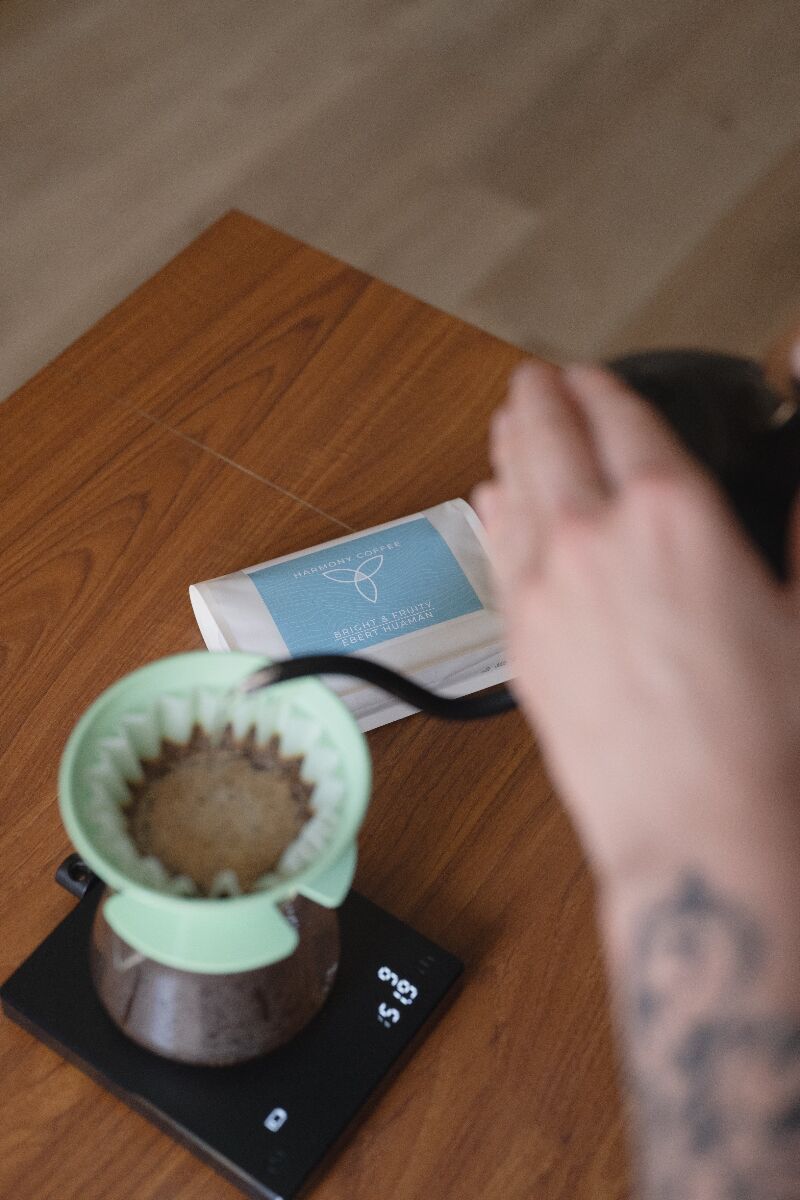
Because this coffee is expressive and fruity, accurately measuring your dose and yield will help you hit the sweet spot. We strongly recommend using a reliable scale — see our guide to the best coffee scales and our bench favourite, the Felicita Parallel.
Brewing Tips
- Rest window: Follow the recommended 27–60 days off roast for the best clarity and balance.
- Filter brewing: Start with a 1:16–1:17 ratio and a medium-fine grind, adjusting to balance the coffee’s floral notes and citrus intensity.
- Espresso: Start with a longer ratio, such as 1:2.2–1:2.4, to showcase the coffee’s floral aromatics, citrus character and sweetness. An even, level tamp matters here too; see our guide to the best coffee tampers.
- Starting recipe: Orea V4, 15.5g coffee, 250g water, with a target brew time of approximately 2:20.
Explore More Recipes
To try recipes from world-class coffee brewers, explore our guide to the best filter coffee recipes of 2026.
Explore Other Coffees
- Manuel Marlo Gesha – a bright, effervescent Peruvian Gesha with bergamot, jasmine and orange blossom.
- Abner & Vanessa – a natural Brazilian coffee from husband-and-wife duo Abner and Vanessa, with notes of Hobnob biscuit, pear and creamy macadamia.
- El Vergel Decaf – quite possibly the best decaf we've ever found. World-class flavour, without the buzz. Also available as a decaf subscription.
- From our archive: El Diamante – an elegant washed Caturra from northern Peru, with Silver Needle tea, red berries and maple sweetness.
- Want coffees like this delivered? Try our Single Origin Coffee Subscription, a rotating selection of our favourite single-origin coffees.
- Browse all single-origin coffees
Explore Our Coffee Collections
Learn More About Coffee


Buying for a café or office? See our wholesale coffee