


Harmony Coffee Roaster
Musaza Lot 1 - Washed Rwandan Red Bourbon
Couldn't load pickup availability
Musaza Lot 1 – Rwanda Washed Red Bourbon
Musaza Lot 1 is a washed Red Bourbon from our friends at Rwamatamu in Rwanda. It’s a clean, sweet cup with black tea, orange, honey and caramel, and it works brilliantly as a filter or a black espresso.
Flavour Characteristics
Best As: Filter Coffee / Black Espresso Drinks
Flavour Description: Black Tea, Orange, Honey, Caramel
Origin & Producer Details
- Producer: Laetitia & Gaston
- Washing Station: Mbare, Rwamatamu
- Origin: Rwanda
- Region: Lake Kivu, Nyamasheke
- Variety: Red Bourbon
- Process: Washed
- Importer: Omwani
Want to know more about coffee from Rwanda? Read our Rwanda origin guide.
Recommended Rest
For the best tasting brew of this specialty coffee from Rwanda, we'd suggest enjoying it 22–48 days off roast. We wrote a blog on this here.
Bought more than you can drink at its peak? Our guide to freezing coffee shows how to keep it tasting this good for months.
About Rwamatamu Coffee
Rwamatamu Coffee was founded in 2015. It’s a family-run business, set up to tackle poverty by creating jobs in the local community.
The estate covers 20 hectares of coffee farmland. As well as growing their own coffee, the team buy cherries from partner co-operatives, local producers and smallholder farmers, then process, sun-dry, sort and pack everything for export.
Location and Growing Conditions
Rwamatamu’s farm and washing station are in Rwanda’s Western Province, among the rolling hills around Lake Kivu in Nyamasheke District.
The region has a tropical highland climate, with temperatures averaging 14–24°C and plenty of regular rainfall. Arabica coffee thrives here, producing dense, hard beans that are packed with flavour.
The farm sits between 1,600 and 2,000 metres above sea level on rich volcanic soil, and the harvest runs from January to March.
Processing and Quality
Rwamatamu’s coffee is hand-picked to a high standard, fully washed with spring water and dried in the sun. They’re currently working towards organic and fair trade certification, and they put a lot of effort into making a positive social and economic difference in farming communities, particularly for women.
The People Behind Rwamatamu
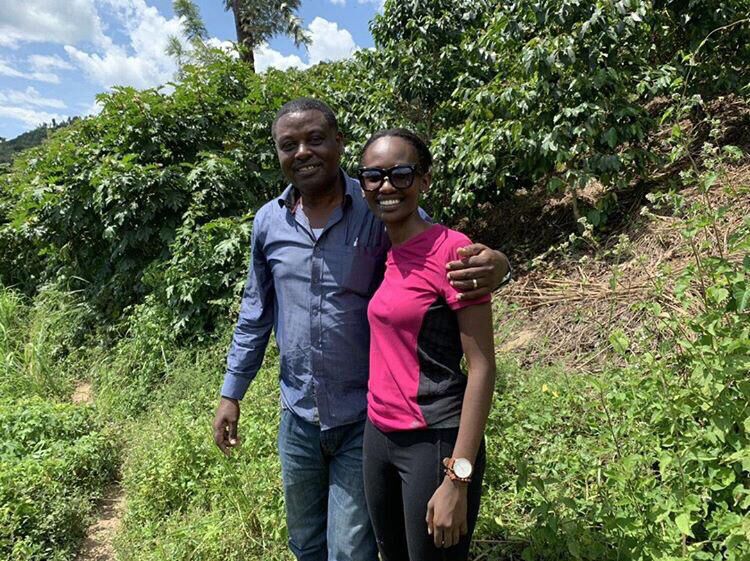
Husband and wife Rutaganda Gaston and Mukantwaza Laetitia set up Rwamatamu Coffee to support their family, and their children grew up helping out on the estate. Their daughter, Marie Bernice, got stuck into everything from negotiations to educational materials and marketing.
Community and Impact
Rwamatamu work closely with co-operatives of local coffee farmers, and 80% of their employees are women. They build strong, lasting relationships with the community by buying beans from them regularly, investing in their staff and sticking to a set standard of quality every year. This is the fifth harvest in a row that we have worked with Rwamatamu, and it's a joy to have these coffees on our offer list once again!
Our Relationship With Rwamatamu
Rwamatamu’s coffees are really special ones for us to release.
Firstly, they always seem to up their game year on year, with brighter, fruitier and more floral coffees than the previous years, with improved irrigation, sorting, screen separating and other farm practices.
But secondly, because they’re astoundingly great people.
Bernice and Luke used to live very close to us in York, which is how we first met. Over the course of several months, we developed a great friendship which would lead to us hanging out on a regular basis; going to the local climbing gym, meeting for coffees, house parties, surprise visits to the roastery etc. In spite of their busy schedules, they always made time for us.
It was a bittersweet moment when Bernice and Luke moved back to Rwanda to take on more responsibility at the farm-level operations from Bernice’s parents (Laetitia and Gaston). But on the bright side, it has given us a very good excuse to travel out to Rwanda!
We’re in regular cahoots with Bernice and the Rwamatamu team, and always get very excited when it’s time to taste - and that time is now.
This coffee is a great example of how much processing shapes flavour. You can learn more in our coffee processing guide.
How to Brew This Coffee
This is a clean, sweet coffee, and getting your dose and yield spot on will help you get the best from it. We strongly recommend using a reliable scale, so take a look at our guide, The Best Coffee Scales, and our bench favourite, the Felicita Parallel.
Brewing Tips
- Rest window: Follow the recommended 22–48 days off roast for best clarity, flavour intensity and balance.
- Filter brewing: Start with a 1:16–1:17 ratio and a medium-fine grind, adjusting to balance the orange brightness and honey sweetness.
- Espresso: Start at 1:2–1:2.2, brewed in about 30 seconds, then adjust to taste.
- Best recipe: Orea v4, 16g coffee, 250g water, 2:30 brew time.
Explore More Recipes
To try out more recipes from world-class coffee brewers, we've compiled this blog, featuring the best filter coffee recipes of 2026 from some of the world's best filter coffee brewers.
Explore Other Coffees
- Bookkisa – a vibrant, tropical Ethiopian natural from Guji, with pineapple, blueberry juice and white peach.
- Malawo – a washed Ethiopian 74158 from Sidama, with jasmine florals, lemonade and candied lemon.
- El Vergel Decaf – quite possibly the best decaf we've ever found. World-class flavour, without the buzz. Also available as a decaf subscription.
- Primavera Family – our new Easy Drinker: a washed Caturra from Huehuetenango, Guatemala, with strawberry, brownie bites, Hobnob biscuit and cocoa.
- Niguse Jilo – a natural Kurume from Halo Bariti, Yirgacheffe, with blueberry compote, honey, Earl Grey and white peach.
- Red Sparrow – the award-winning anaerobic natural Yun Catimor from Yunnan, China, with honeydew melon, dragonfruit, mint and black tea.
- Bekele Yutute – an anaerobic natural 74158 from Bensa, Sidama, with Orange Starburst, peach yoghurt, blueberry and Earl Grey.
- El Dorado – our current Masterpiece: a rare natural Wush Wush from Loja, Ecuador, with pineapple, banana brûlée, lime and candyfloss.
- Abner & Vanessa – a natural Brazilian coffee with notes of Hobnob biscuit, pear and creamy macadamia.
- From our archive: Musaza Lot 3 – a natural Red Bourbon from Rwanda, with tangerine, apricot and black tea.
- From our archive: Tuzamyrane – a natural Red Bourbon from a Rwandan women's co-operative, with stewed rhubarb, strawberry and cherries.
- From our archive: Kibaya – a high-clarity washed Red Bourbon from Rwanda, with lemon, orange sherbet and black tea.
- Want coffees like this delivered? Try our Single Origin Coffee Subscription, a rotating selection of our favourite single-origin coffees.
- Browse our single-origin coffees
Check Out More of Our Collections
Espresso coffee beans collection
Filter coffee beans collection
Check Out Some of Our Guides
A complete beginner's guide to coffee processing methods
FAQs
What does Rwanda washed Red Bourbon coffee taste like?
Washed Red Bourbons from Rwanda tend to be clean, bright and sweet. This one tastes of black tea and juicy orange, with lots of honey and caramel sweetness.
What is Red Bourbon coffee?
Red Bourbon is a classic Arabica variety, loved for its sweetness, balance and clarity. It’s widely grown in Rwanda and is behind many of the country’s best specialty coffees.
What does washed process coffee mean?
In the washed process, the cherry pulp is removed and the beans are fermented in water before they’re dried. Washed coffees usually taste cleaner and brighter, with really precise flavours.
Is this coffee better for filter or espresso?
It’s great either way. As a filter, you get all the clarity, orange brightness and tea-like body. As an espresso, it turns richer and more syrupy, with deeper honey and caramel sweetness.
How long should I rest this coffee before brewing?
We’d recommend brewing it 22–48 days after roasting. That extra time lets the flavours settle and open up, so you get a sweeter, clearer and more balanced cup.
Where is this coffee grown?
It’s grown in Nyamasheke District in western Rwanda, near Lake Kivu. The high altitude, rich volcanic soil and steady climate all help to produce dense beans with lots of flavour.
Who are Rwamatamu Coffee?
Rwamatamu Coffee is a family business in Rwanda, founded by Laetitia and Gaston. They produce top-quality coffee while creating jobs and supporting local farming communities, and we’re lucky to count the family as good friends of ours.
Why does this coffee taste so clean and sweet?
It’s down to both the Red Bourbon variety and the washed process. Because the fruit is removed before drying, the coffee’s natural sweetness and bright orange notes come through really clearly.
What does a washed process do to coffee flavour?
Washing shows off the coffee’s clarity, acidity and the character of its variety and region. Washed coffees tend to be cleaner and more delicate, while naturals are usually heavier and fruitier.
Is this a high-quality specialty coffee?
Absolutely. The picking, processing and sorting are all done with real care, and Rwamatamu are serious producers who seem to get better every year.


Buying for a café or office? See our wholesale coffee