


Harmony Coffee Roaster
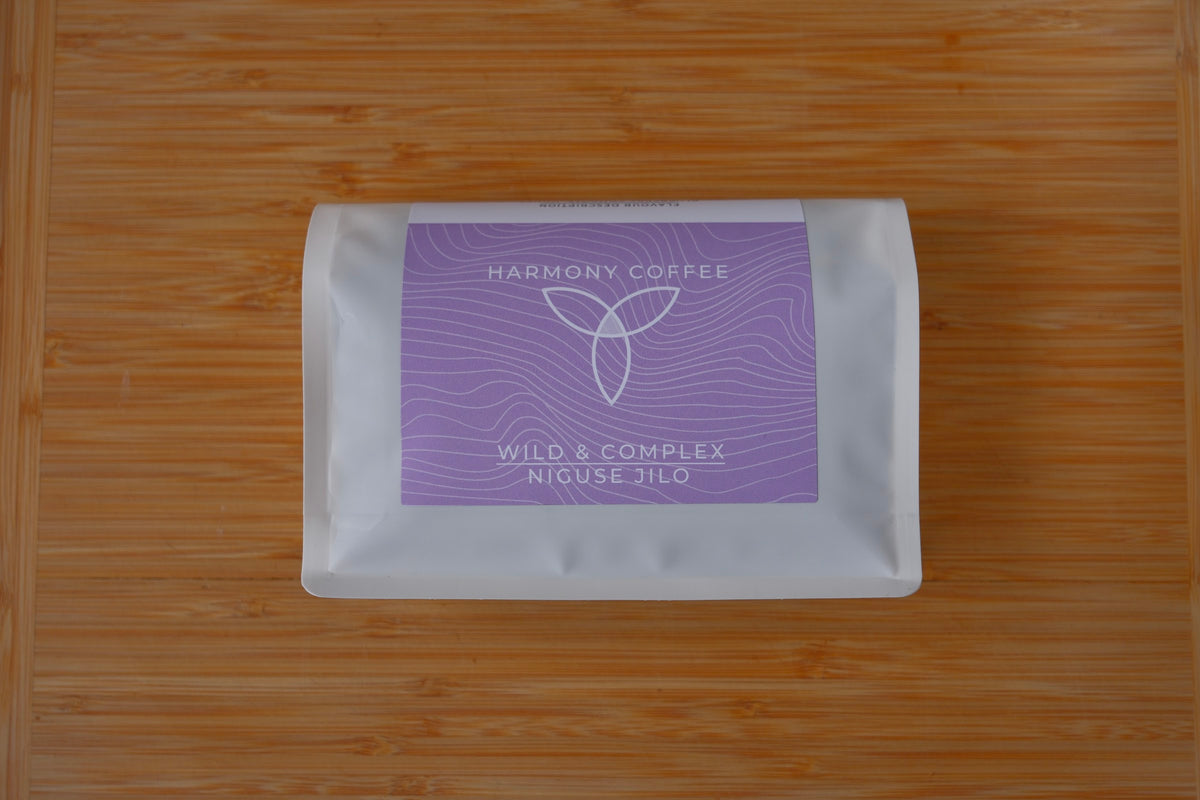
Niguse Jilo - Natural Ethiopian Kurume
Couldn't load pickup availability
Niguse Jilo is a sweet, fruity natural Ethiopian coffee from Halo Bariti in Gedeb, Yirgacheffe, grown by Niguse himself on his farm at around 2,150 metres above sea level. These Kurume coffee beans taste of blueberry compote, honey, Earl Grey and white peach, with a jammy sweetness and a delicate, tea-like finish. Niguse is a lead farmer in his community, and his coffee has been recognised in Ethiopia’s Cup of Excellence, so we’re really excited to be roasting it.
Flavour Characteristics
- Best As: Filter Coffee and Black/Milk espresso-based drinks. Want to pour better latte art too? Read UK Latte Art Champion Ben Lewis’s tips.
- Flavour Profile: Blueberry Compote | Honey | Earl Grey | White Peach
Origin & Producer Details
- Producer: Niguse Jilo
- Origin: Ethiopia
- Region: Halo Bariti, Gedeb, Yirgacheffe
- Variety: Kurume
- Process: Natural
- Sourced Via: Mecota Coffee & Omwani Coffee
Suitable for
Recommended rest
Recommended rest: For the best tasting results, we recommend brewing this particular coffee 20–40 days off roast. Read our full guide to resting coffee. Learn why light roasts reward a longer rest.
Bought more than you can drink at its peak? Our guide to freezing coffee shows how to keep it tasting this good for months.
About Niguse Jilo
About Niguse Jilo
Niguse Jilo grows coffee in Halo Bariti, a village in the Gedeb district of Ethiopia’s Gedeo Zone. His farm sits at around 2,150 metres above sea level, and the money he earns from his coffee helps support his large family.
Niguse is a lead farmer in the Bore Nageso farmer group, so other farmers look to him as an example of good cultivation and farm maintenance. In 2022, his coffee was recognised among the top 40 entries in Ethiopia’s Cup of Excellence.
Halo Bariti, Gedeb
Gedeb sits in the far south-eastern corner of the Gedeo Zone, the narrow highland plateau whose coffee is sold under the famous Yirgacheffe name. Its farms reach some of the highest growing altitudes in Ethiopia, and Halo Bariti, just east of Gedeb town, is known for bright, fruity naturals like this one.
A Word From Mecota Coffee
We buy Niguse’s coffee through Mecota Coffee and Omwani Coffee. Niguse is one of three Ethiopian farmers Omwani started working with in 2025, with the aim of buying their coffee every year so they can keep investing in their farms and families. Mecota’s founder, Moata Raya, explains:
“My wife Rosa and I founded Mecota PLC in 2023 with a vision to craft the finest Ethiopian coffee. I have spent my career focused on improving coffee quality and sustainability in Ethiopia. I have worked as a coffee quality trainer, managed farm and wet mill operations, and collaborated with Technoserve to map local coffee profiles and enhance quality control for washed coffees. It is our dedication to unique processing techniques and sustainable development for coffee growing communities that makes Mecota coffees truly exceptional.”
Moata Raya, Mecota Coffee (quoted by Omwani Coffee, 2024)
What Is a Natural Coffee?
What Is a Natural Coffee?
In a natural process, ripe coffee cherries are dried whole in the sun, with the seed still inside the fruit. Drying usually takes several weeks, and the cherries are turned regularly so they dry slowly and evenly.
Because the seed spends all that time inside the drying fruit, naturals often taste sweeter and more fruit-forward than washed coffees, which is a big part of why this lot tastes of blueberry compote and honey.
New to processing methods? Our beginner’s guide to coffee processing explains washed, natural, honey and anaerobic coffees side by side.
The Kurume Variety
The Kurume Variety
This lot is Kurume, one of the regional landrace varieties native to Ethiopia’s Gedeo Zone, the home of Yirgacheffe coffee. Landraces like Kurume were shaped over generations by farmers, who selected and replanted seed from their best trees long before formal coffee breeding began in Ethiopia.
The variety takes its name from an indigenous Kurume tree, which bears small fruit and a reliable harvest every year. The coffee shares those traits: compact trees with small leaves, small cherries and small, dense beans. It’s one of the most widely grown varieties among farmers in Gedeo and neighbouring Guji.
How to Brew This Coffee
How to Brew This Coffee
Dial In With Accuracy
This is an expressive, fruit-forward coffee, so accurately measuring your dose and yield will help you hit the sweet spot. We strongly recommend using a reliable scale. See our guide to the best coffee scales and our bench favourite, the Felicita Parallel.
Brewing Tips
- Rest window: Follow the recommended 20–40 days off roast for the best clarity and balance.
- Filter brewing: Start with a 1:16–1:17 ratio and a medium-fine grind, then adjust to balance the berry sweetness and Earl Grey finish. Grind quality makes a big difference with filter, so here’s our pick of the best filter coffee grinders for home.
- Espresso: Start around 1:2–1:2.2 for a sweet, jammy shot that also works beautifully in milk. An even, level tamp matters here too; see our guide to the best coffee tampers.
Explore More Recipes
To try recipes from world-class coffee brewers, explore our guide to the best filter coffee recipes of 2026.
Explore Other Coffees
Explore Other Coffees
- Bekele Yutute – an anaerobic natural 74158 from Bensa, Sidama, with Orange Starburst, peach yoghurt, blueberry and Earl Grey.
- Bookkisa – a vibrant, tropical natural Ethiopian from Guji, with pineapple, blueberry juice and white peach.
- El Dorado – our current Masterpiece: a rare natural Wush Wush from Loja, Ecuador, with pineapple, banana brûlée, lime and candyfloss.
- Malawo – a washed Ethiopian 74158 from Sidama, with jasmine florals, lemonade and candied lemon.
- Abner & Vanessa – a natural Brazilian coffee with notes of Hobnob biscuit, pear and creamy macadamia.
- El Vergel Decaf – quite possibly the best decaf we’ve ever found. World-class flavour, without the buzz.
- Musaza Lot 1 – an incredibly delicate washed Red Bourbon from our friends at Rwamatamu, Rwanda, with tangerine, orange blossom and lemon tea.
- Primavera Family – our new Easy Drinker: a washed Caturra from Huehuetenango, Guatemala, with strawberry, brownie bites, Hobnob biscuit and cocoa.
- Red Sparrow – the award-winning anaerobic natural Yun Catimor from Yunnan, China, with honeydew melon, dragonfruit, mint and black tea.
- Browse all single-origin coffees
Want coffees like this delivered? Try our Single Origin Coffee Subscription, a rotating selection of our favourite single-origin coffees. Buying for someone else? Our gift coffee subscription makes a great present, and our office coffee subscription keeps your workplace stocked.
Explore Our Coffee Collections
Learn More About Coffee


Buying for a café or office? See our wholesale coffee