


Harmony Coffee Roaster
Banchi Geremew - Washed Ethiopian Gibirinna
Couldn't load pickup availability
Banchi Geremew is a washed Ethiopian coffee from Banko Michicha in Guji, produced at the washing station Banchi owns and runs herself. These Gibirinna (74110) coffee beans taste of yuzu sherbet, blueberry, jasmine florals and bergamot in a bright, clean and floral cup, and they shine as a filter or a black espresso. It’s one of our final releases of 2026, and we couldn’t be more excited to share it.
Flavour Characteristics
- Best As: Filter coffee and black espresso-based drinks
- Flavour Profile: Yuzu Sherbet | Blueberry | Jasmine Florals | Bergamot
Origin & Producer Details
- Producer: Banchiyayehu (Banchi) Geremew
- Washing Station: Owned & run by Banchi, Banko Michicha
- Origin: Ethiopia
- Region: Banko Michicha, Guji
- Variety: Gibirinna (74110)
- Process: Washed
- Q-Score: 88.50
- Sourced Via: Mecota Coffee & Omwani Coffee
Suitable for
Recommended rest
Recommended rest: For the best tasting results, we suggest brewing this coffee 25–56 days off roast. A little patience lets the flavours settle and open up, for a sweeter, clearer and more balanced cup. Read our guide to resting coffee for more. Learn why light roasts reward a longer rest.
Bought more than you can drink at its peak? Our guide to freezing coffee shows how to keep it tasting this good for months.
One of Our Final Releases of 2026
One of Our Final Releases of 2026
This coffee shocked me. I’m not easily shocked by Ethiopian coffees, because the standard is consistently so high, and we’re blessed with an epic sourcing partner who helps us find some of the best coffees out there. Nevertheless, this is a coffee that has me genuinely extremely excited to release.
We tasted it with James and the Omwani team, on a table full of incredible washed coffees, and this one stopped us in our tracks. Normally, choosing a favourite comes down to the finest of margins. This time, there was absolutely nothing to deliberate. I didn’t even ask how much it was. We locked in 180kg right there and then, and that was that.
We’ve been lucky enough to share some truly special coffees with you this year, and we couldn’t think of a better way to help send off 2026 than with Banchi’s coffee as one of our final releases of the year.
About Banchi Geremew
About Banchi Geremew
Banchiyayehu Geremew, known to most simply as Banchi, owns and runs her own washing station in Banko Michicha, a kebele in the Kercha district of West Guji, at around 2,050 metres above sea level. She has a few coffee trees of her own, but come harvest time her focus is the station, which buys cherry from farmers in Banko Michicha and the nearby village of Soke.
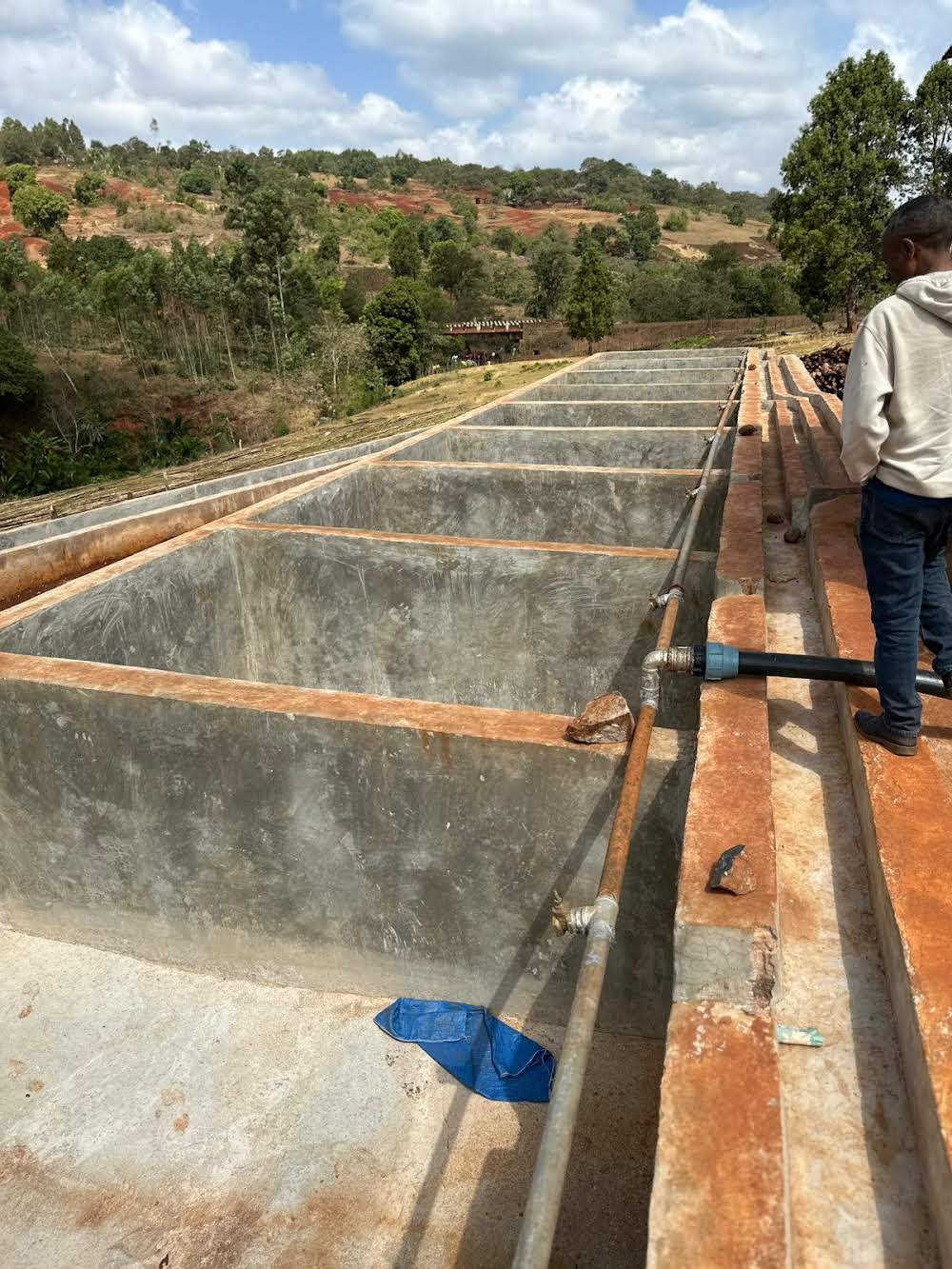
Banchi has invested heavily in the site, building plenty of fermentation tanks and raised drying beds so she can produce both washed and natural lots. That’s a bold choice in Guji, where an unreliable water supply makes washed coffees rare, but with support from her brother and father, Banchi is determined to make it work. Judging by this lot, it’s working brilliantly.
It’s still unusual to find a woman owning and running a washing station in Ethiopia. Women do a huge amount of the hands-on work in the country’s coffee, yet ownership of land and processing sites has traditionally sat with men, and a station is a serious financial commitment, with cherry paid for in cash at harvest and stock held until it sells. All of which makes what Banchi has built even more impressive.
Banko Michicha, Guji
Guji sits in Ethiopia’s Oromia region, and for years its coffee was sold under the Sidamo name before it was recognised as an origin in its own right. Today it’s home to some of the most sought-after coffees in the country. Banko Michicha’s altitude helps the cherries ripen slowly, building the sweetness, florals and bright acidity that washed Guji coffees are loved for.
Guji has given us some brilliant coffees this year, including Bookkisa, a vibrant, tropical natural from Shakiso.
Sourced Through Mecota & Omwani
We buy Banchi’s coffee through Mecota Coffee and Omwani Coffee, the same partnership behind our Bekele Yutute and Niguse Jilo. Mecota was founded in 2023 by Moata Raya and his wife Rosa, and works directly with private producers whose farms and washing stations export their own lots, so every bag can be traced right back to where it was grown and processed. We have conservatively scored this washed lot 88.50.
Washed Processing
Washed Processing
Once the cherries arrive at the station, they’re pulped to strip away the skin and most of the fruit, and the coffee is submerged in a fermentation tank for 48 hours. The remaining mucilage is then washed off, and the coffee is drained and spread out on raised drying beds for 12 days. Finally, it rests in a pile in the warehouse for 7 days to condition, before being bagged and sent to Dukem Getachew’s dry mill to be prepared for export.
Washing the fruit away before drying lets the character of the variety and the land come through with real clarity, which is why great washed Ethiopians taste so clean, floral and tea-like. In this lot, that clarity shows up as yuzu sherbet, bergamot and jasmine, with a sweet blueberry note underneath.
To taste how much processing shapes flavour, try it alongside Niguse Jilo, a natural Ethiopian from Yirgacheffe, or compare it with Malawo, a washed 74158 from Sidama. You can learn more in our coffee processing guide.
The Gibirinna (74110) Variety
The Gibirinna (74110) Variety
This lot is a mix of Gibirinna, better known by its research code 74110, and local landraces. Gibirinna was selected by the Jimma Agricultural Research Centre (JARC) from a mother tree near Bishari village in the Metu area of Illubabor, where researchers were searching for trees that could resist coffee berry disease. The “74” refers to 1974, the year it was selected, and it was released to farmers in 1979.
It grows into short, compact trees with small leaves and small cherries, and has become one of the most widely planted varieties in Ethiopia. Here it’s grown alongside local landraces, the native varieties farmers have selected and replanted over generations.
How to Brew This Coffee
How to Brew This Coffee
Dial In With Accuracy
This is a clean, floral coffee, so accurately measuring your dose and yield will help you hit the sweet spot. We strongly recommend using a reliable scale. See our guide to the best coffee scales and our bench favourite, the Felicita Parallel.
Brewing Tips
Banchi Geremew is great either way. As a filter, you get all of its clarity, with yuzu, bergamot and jasmine florals and a delicate, tea-like body. As a black espresso, it turns sweeter and more concentrated, with zesty citrus and blueberry.
- Rest window: Follow the recommended 25–56 days off roast for the best clarity, flavour intensity and balance.
- Filter brewing: Start with a 1:16–1:17 ratio and a medium-fine grind, adjusting to balance the yuzu brightness and jasmine florals. Grind quality makes a big difference with filter, so here’s our pick of the best filter coffee grinders for home.
- Espresso: Start at 1:2–1:2.2, brewed in about 30 seconds, then adjust to taste. An even, level tamp matters here too; see our guide to the best coffee tampers.
Explore More Recipes
To try recipes from world-class coffee brewers, explore our guide to the best filter coffee recipes of 2026.
Explore Other Coffees
Explore Other Coffees
- Niguse Jilo – a natural Kurume from Halo Bariti, Yirgacheffe, with blueberry compote, honey, Earl Grey and white peach.
- Malawo – a washed Ethiopian 74158 from Sidama, with jasmine florals, lemonade and candied lemon.
- Musaza Lot 1 – an incredibly delicate washed Red Bourbon from our friends at Rwamatamu, Rwanda, with tangerine, orange blossom and lemon tea.
- Primavera Family – our new Easy Drinker: a washed Caturra from Huehuetenango, Guatemala, with strawberry, brownie bites, Hobnob biscuit and cocoa.
- Red Sparrow – the award-winning anaerobic natural Yun Catimor from Yunnan, China, with honeydew melon, dragonfruit, mint and black tea.
- El Dorado – our current Masterpiece: a rare natural Wush Wush from Loja, Ecuador, with pineapple, banana brûlée, lime and candyfloss.
- Abner & Vanessa – a natural Brazilian coffee from husband-and-wife duo Abner and Vanessa, with notes of Hobnob biscuit, pear and creamy macadamia.
- El Vergel Decaf – quite possibly the best decaf we’ve ever found. World-class flavour, without the buzz. Also available as a decaf subscription.
- Browse all single-origin coffees
Want coffees like this delivered? Try our Single Origin Coffee Subscription, a rotating selection of our favourite single-origin coffees. Buying for someone else? Our gift coffee subscription makes a great present, and our office coffee subscription keeps your workplace stocked.
Explore Our Coffee Collections
Learn More About Coffee


Buying for a café or office? See our wholesale coffee